
Water Hammer: Why Your Pipes Bang and How Plumbers Fix It
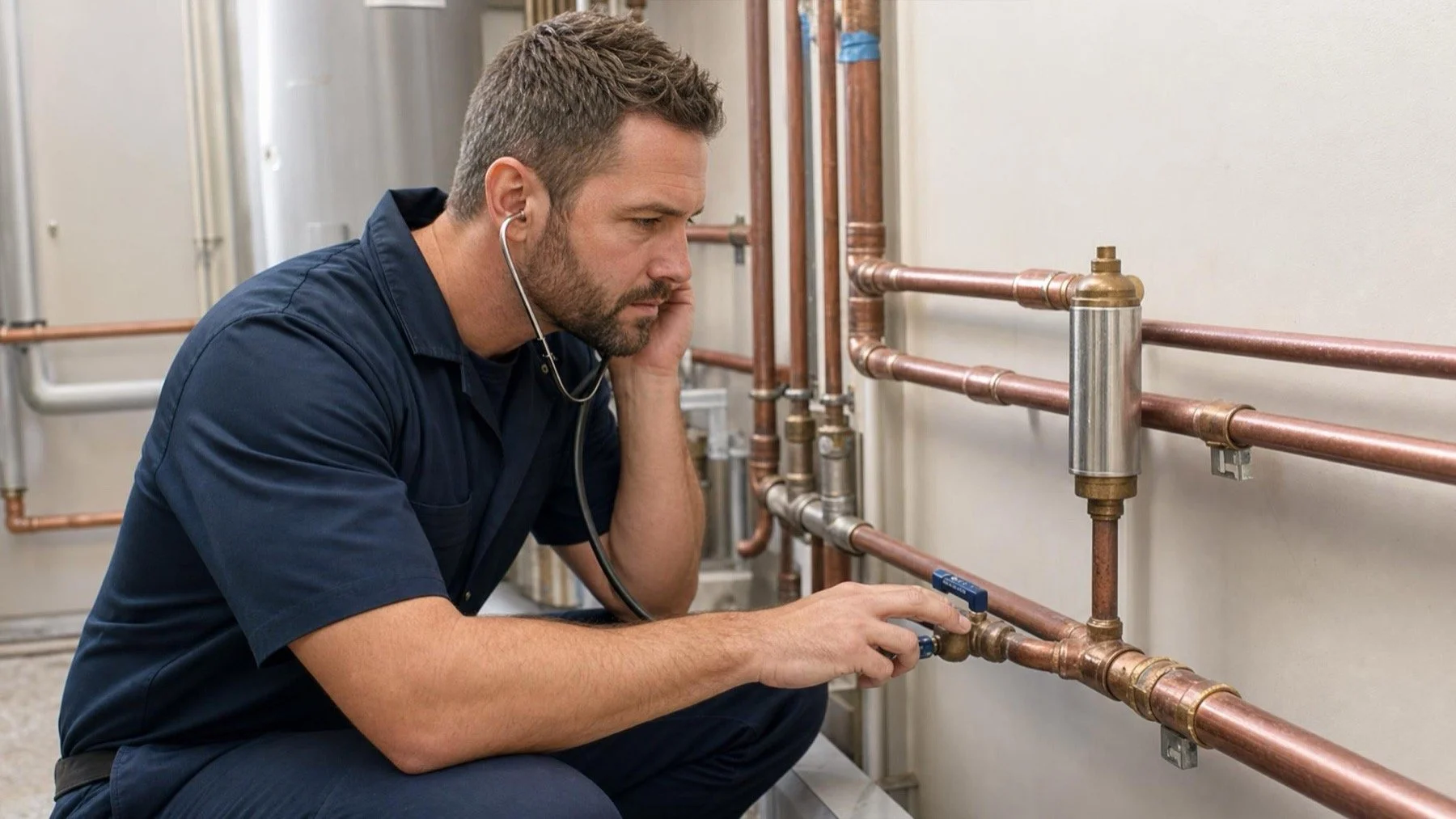
Water hammer is a pressure wave created when moving water stops quickly. The sudden change sends energy through the pipe, which can produce a sharp bang near a washing machine, dishwasher, toilet, or fast closing faucet.
Not every pipe noise is water hammer. Expansion, a loose support, a worn fill valve, and pressure reducing valve trouble can sound similar. The timing of the noise gives the first useful clue.
When someone calls about banging pipes, our first question is simple: exactly when does the noise happen? The answer often separates water hammer from a loose pipe, thermal movement or a worn fixture valve.
Listen for the exact trigger
Run one fixture or appliance at a time and note whether the bang occurs when flow starts, while water is moving, or at shutoff. A single bang at abrupt shutoff points toward hydraulic shock. Ticking as hot water travels often points toward thermal movement instead.
Do not repeatedly provoke a violent bang. Record a short video from a safe location and note the fixture involved. That evidence helps a plumber reproduce the condition without guessing.
Check system pressure and valve speed
Higher static pressure increases the force available when a valve closes. A plumber measures pressure with no fixtures running and may observe changes during demand. The test can reveal an ineffective pressure reducing valve or another supply issue.
Modern appliance solenoids close quickly. If the system has no effective cushion near that valve, the pressure wave travels until the piping or a fitting moves enough to make noise.
Why pipe supports matter
A pipe can strike framing even when pressure is acceptable. Missing clips, oversized holes, or long unsupported runs let normal movement become audible. Finished walls make the source harder to see, so the plumber compares sound location with the likely route.
Adding a random clamp at the loudest point may only move the noise. The repair needs allowance for normal expansion while preventing the pipe from hitting nearby material.
Where arrestors fit
A listed water hammer arrestor provides a sealed cushion near a quick closing valve. Correct sizing and placement matter. An arrestor installed far from the trigger or hidden without service consideration may not solve the problem.
Old air chambers can fill with water and stop cushioning the line. A plumber should identify what is actually installed before recommending another device.
Decide when the noise needs service
Book a diagnosis when the bang is new, strong, affects several fixtures, follows pressure changes, or accompanies leaks. Inspect visible connections after the event, but do not open a wall or adjust a pressure control without understanding the system.
Seal Plumbing handles diagnosis through its plumbing repair service. Check the areas served across the GTA and share the trigger when you book.
Frequently asked questions
Is water hammer dangerous?
Repeated strong shock can stress joints, valves, and supports. A new or worsening bang deserves diagnosis even when no leak is visible.
Why does my washing machine cause banging pipes?
Its inlet solenoid closes quickly. System pressure, support condition, and the absence or failure of a nearby arrestor affect the result.
Can reducing water pressure stop the bang?
Only when pressure is excessive or poorly controlled. Pressure should be measured before any adjustment.
Are ticking pipes the same as water hammer?
Usually not. Ticking often comes from hot pipe expansion against framing, while water hammer follows a sudden flow stop.
Can a plumber fix water hammer without opening walls?
Sometimes. Accessible valves, pressure controls, and arrestor points may allow a repair. Hidden loose piping can require selective access.
Record the bang before the visit
A short video and the name of the fixture that triggers the noise give us a useful starting point. Contact Seal Plumbing if the bang is sharp, repeatable or getting worse.