
Drain Camera Inspection: What It Finds and When You Need One
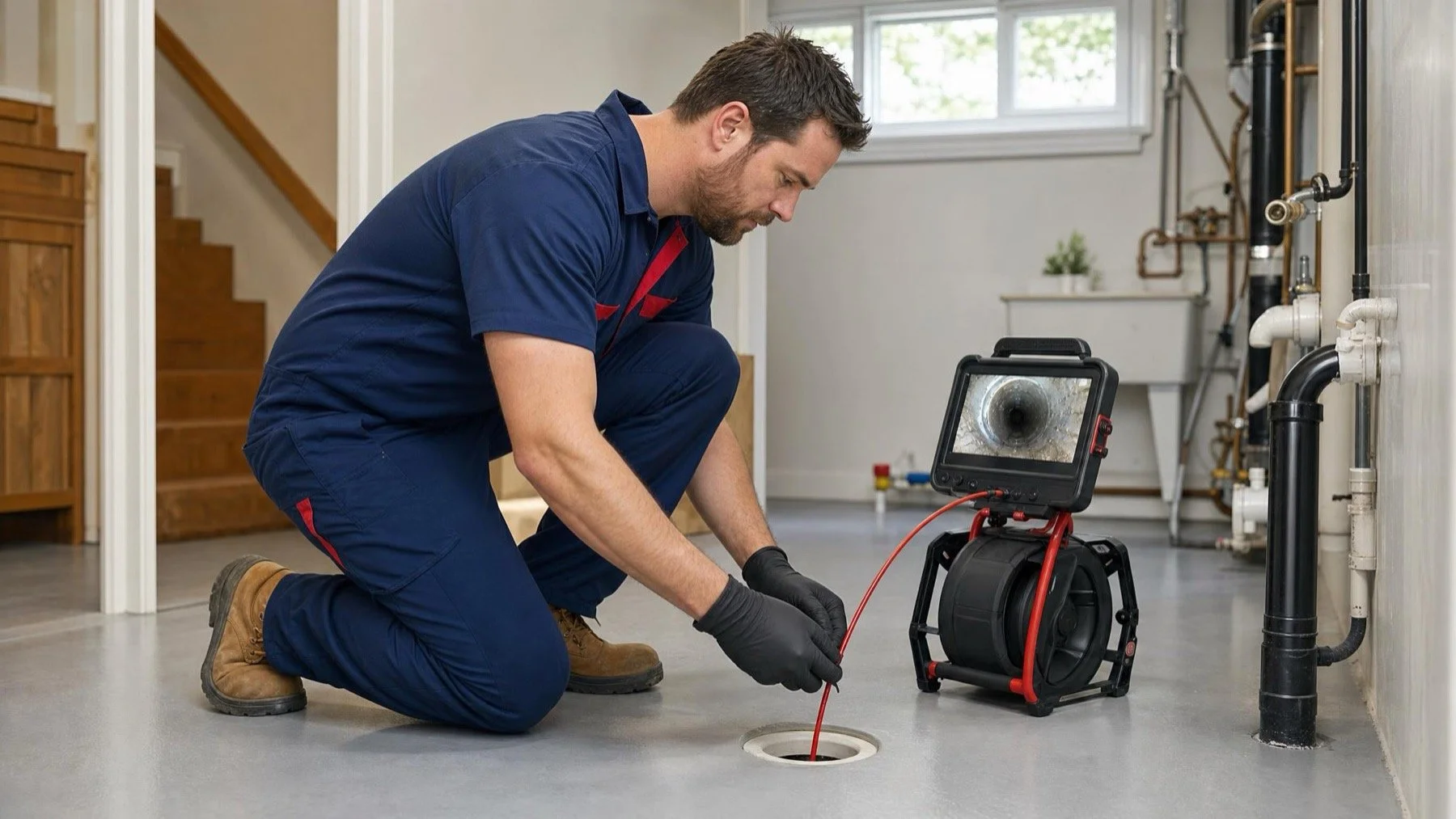
Seal Plumbing drain camera inspection planning and professional plumbing work in a clean GTA property
A drain that clears and blocks again is telling you that the first fix did not remove the cause. A drain camera inspection lets a plumber follow the inside of an accessible pipe and record the exact location of roots, scale, a separated joint, a belly, or an object.
The camera does not repair anything. Its value is evidence. That evidence helps you avoid paying for the wrong cleaning method or opening a finished area without a clear reason.
When we inspect a recurring backup, we want the footage to answer a practical question: clean the line, monitor it, or repair it. A dramatic image without a location or explanation does not help a homeowner make that call.
When a camera inspection changes the repair plan
One slow sink rarely needs a camera first. A branch line may simply need its trap or short run cleared. A camera becomes more useful when backups return, several fixtures react together, sewage odours persist, or a property has an unknown drain history.
A pre renovation inspection can also reduce surprises. If a basement bathroom will connect to an older building drain, confirming the route and condition before concrete work gives the project team better information.
What the plumber can see
A self levelling camera can show the pipe wall, fittings, debris, standing water, offsets, cracks, and intruding roots when visibility is clear. A distance counter helps relate the image to a location in the building or yard.
The recording matters. Ask the plumber to explain the finding while showing the footage. A dark line is not automatically a crack, and a small area of residue is not automatically the source of a backup. Context separates a useful diagnosis from a dramatic screenshot.
Where camera footage has limits
The lens cannot see through opaque standing water or heavy sludge. It also cannot look through the pipe wall to prove where groundwater is entering. Tight bends, a collapsed section, or a line that has not been opened enough for the camera can stop the inspection.
Sometimes the next step is cleaning, then a second pass. In other cases, locating equipment, a pressure test, or selective access provides the missing answer. A good report states what was visible and what could not be confirmed.
How to prepare for the visit
Write down which fixtures back up first, how long the problem takes to return, and what cleaning has already been tried. Clear access to cleanouts and avoid adding chemical drain cleaner before the appointment.
If the line contains sewage, stop using the connected fixtures. Review Seal Plumbing’s guide to safe first steps for a clogged drain, then arrange an assessment through its drain and repair services page.
From footage to a practical scope
A useful recommendation connects the observed defect to a method. Localized roots may call for cleaning and monitoring. A broken fitting may require targeted excavation. Widespread deterioration can justify comparing a larger repair with staged work.
Ask for the footage location, the proposed access point, how the repair will be tested, and what finish restoration is excluded. That turns a video into a scope you can evaluate.
Frequently asked questions
Can a drain camera find every leak?
No. It shows the inside of a visible drain. It cannot reliably identify water outside the pipe or inspect a section blocked by dirty standing water.
Should a drain be cleaned before the camera goes in?
Often yes when grease, sludge, or sewage prevents a clear view. The plumber decides whether an initial pass or cleaning should come first.
Can the camera locate a problem under concrete?
A compatible locator can help mark the camera head from above. Depth and location are estimates that guide access planning.
Will camera inspection damage the pipe?
A properly selected camera used through a suitable access point should not damage sound piping. Severely collapsed or fragile pipe requires extra care.
Do I get a copy of the footage?
Ask before booking. A saved recording and a plain explanation make later repair decisions easier.
Get a drain diagnosis you can act on
If the same drain keeps backing up, tell us which fixtures react first and what has already been tried. Contact Seal Plumbing to plan the next diagnostic step.