
Sewer Smell in the Bathroom: Clues to Share With Your Plumber
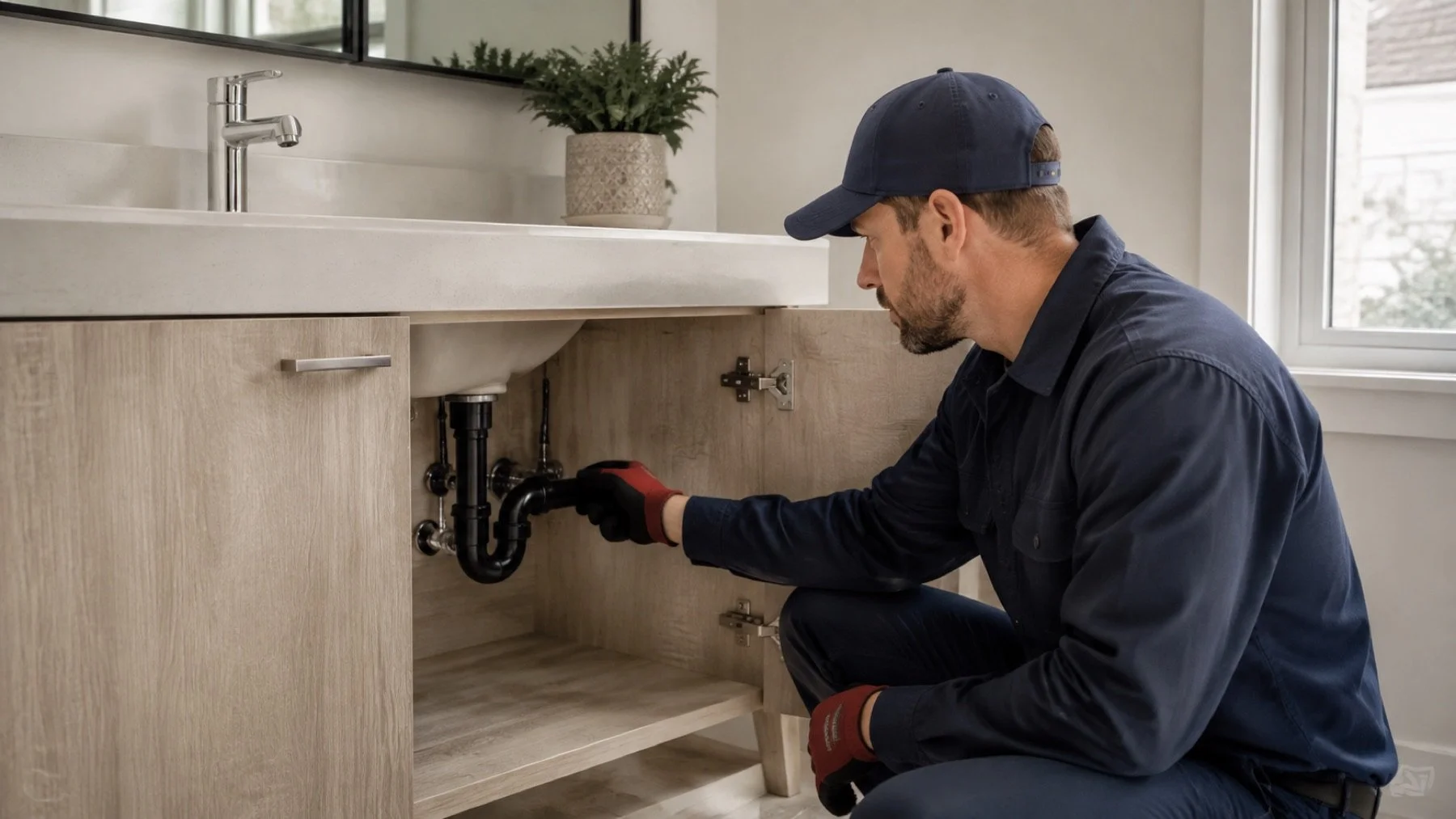
A sewer smell in the bathroom needs a description of where it is strongest and what changes it. Odour near an unused drain, odour after flushing and odour in water drawn from a tap can point to different investigations. Seal Plumbing's drain and fixture repair services provide a starting point for recurring plumbing symptoms in GTA homes.
Describe the location without deciding the cause
Once an immediate gas concern has been ruled out, note whether the smell is strongest at the basin, tub, toilet base or floor drain. Describe when you first noticed it and whether it reaches other rooms. Do not put your face into a drain or open a sealed pump cover to investigate.
Bathroom drains include traps that hold water to separate the room from the drainage system, as explained in Toronto's odour guidance. An infrequently used fixture is therefore useful context. However, the presence of an unused sink does not prove its trap is the only issue. A smell that returns needs a closer look at the installation and the pattern of use.
If the complaint seems tied to running water, tell the plumber whether it happens with hot water, cold water or both. This separates a room odour report from a possible water quality concern. Avoid buying a filter until you know what needs treatment. An odour description alone does not establish the condition of the drinking water.
Notice what changes during ordinary use
You may already have noticed that the smell fades after the bathroom is used, appears after a toilet flush or becomes stronger when another fixture drains. Write down those observations. There is no need to repeatedly flush or run a fixture that is backing up to create a demonstration.
| Observation | Useful detail to report |
|---|---|
| Smell near a rarely used fixture | How long it has been unused and whether normal use changes the odour |
| Smell around the toilet base | Any movement, visible moisture or recent toilet work |
| Odour alongside gurgling | Which fixture is draining when the sound occurs |
| Several rooms affected | Locations, timing and any shared drainage or recent renovation |
The table helps organize a service request. It does not assign a repair to each symptom. For example, a smell at the toilet does not establish that the toilet itself needs replacing. The connection and surrounding area need assessment before choosing parts.
Include changes made before the smell started
A replaced basin, new vanity or recently finished basement can be relevant even if the plumbing looks tidy. Tell the plumber which work took place and whether the odour existed beforehand. Keep any installation photos or invoices available. Those records can show what changed behind the finished surface.
For a home with a sewage ejector, record whether the smell is near the basin or its piping. Leave the lid and connections in place. Inspection of a sealed sewage system belongs with someone equipped to assess it. A nearby floor drain and a pump basin are separate components and should be identified separately.
An unused drain needs water, but a recurring smell needs an explanation
For a dry, accessible floor drain, Toronto advises adding a few litres of clean water to restore the trap's water barrier. Do this only when the drain is not backing up and the immediate gas concern has been resolved. If water rises instead of draining, stop. Report the backup rather than adding more water to try to remove the smell.
Record what happens afterwards. If the odour clears, note which drain received water and when the bathroom was last used. If it returns quickly despite ordinary fixture use, pass that timing to the plumber. Repeatedly adding water without finding out why the barrier is not being maintained can leave you managing a symptom instead of resolving the installation problem.
Consider a guest bathroom that has been unused for several weeks. Its history supports checking the drain's water barrier first. Compare that with a busy bathroom where the smell began the day a toilet was replaced. The second history points the inspection toward the recent work. Neither example proves a fault, but each gives the plumber a better starting point than a request to replace every trap.
Keep tap-water observations separate from room odour
When you are unsure whether the smell comes from the water or the sink area, Toronto's guidance uses a water sample carried to another room as part of its investigation. If the sample does not have the odour away from the basin, tell the plumber that distinction. Do not taste questionable water to test it. Persistent water quality concerns should go to the local water provider as well as any appropriate plumbing assessment.
Before the visit, make a simple room sketch showing the toilet, basin, tub, floor drain and any nearby laundry connection. Mark the places where you noticed the smell without sealing openings or removing components. For a basement bathroom, include the adjacent mechanical room if the odour reaches it. This helps distinguish one fixture complaint from a wider pattern while keeping the investigation out of concealed or sealed systems.
Keep cleaning products out of the diagnosis
Air freshener may mask the smell without changing its source. Adding several cleaners also makes it harder to describe what you are smelling and can create a chemical exposure. Do not mix drain products or add a second product to a drain that already contains a cleaner.
If you have used anything, keep the container or product name and tell the plumber when and where it was added. Stop use of affected fixtures if wastewater backs up. Keep people and pets away from contaminated water rather than trying to clear it through repeated flushing.
Ask how the proposed repair addresses the odour path
A useful diagnosis explains which component allows the odour into the room, what evidence supports that finding and how the repair will be checked. Ask whether the work involves a fixture connection, trap, vent or another part of the system. Camera work may help answer some drainage questions, but it is not a universal first step for every smell.
Where a bathroom renovation is already planned, discuss the existing symptom before finalizing the residential plumbing scope. Covering the area with new finishes can make later access more involved.
At the end of an odour visit, ask what was actually observed rather than accepting a list of possible causes as a diagnosis. If the plumber found a failed connection, the service note should identify that connection and the work completed. If the smell was absent during the appointment, ask which observations would help narrow the next step. Do not request invasive work solely to make the visit produce a definite answer.
Keep the room's normal use in mind when checking the result. An odour that previously appeared after the upstairs bath drained needs a different follow up from one noticed after a month away. Describe any recurrence with the same fixture names and timing used in the first report. That continuity helps the plumber compare the symptom before and after the repair.
For the service request, describe the bathroom odour to Seal Plumbing in terms of location, timing and accompanying symptoms. “Near the toilet base since replacement, with no visible backup” is a practical starting point. The plumber can then explain what needs inspection before recommending a repair.