
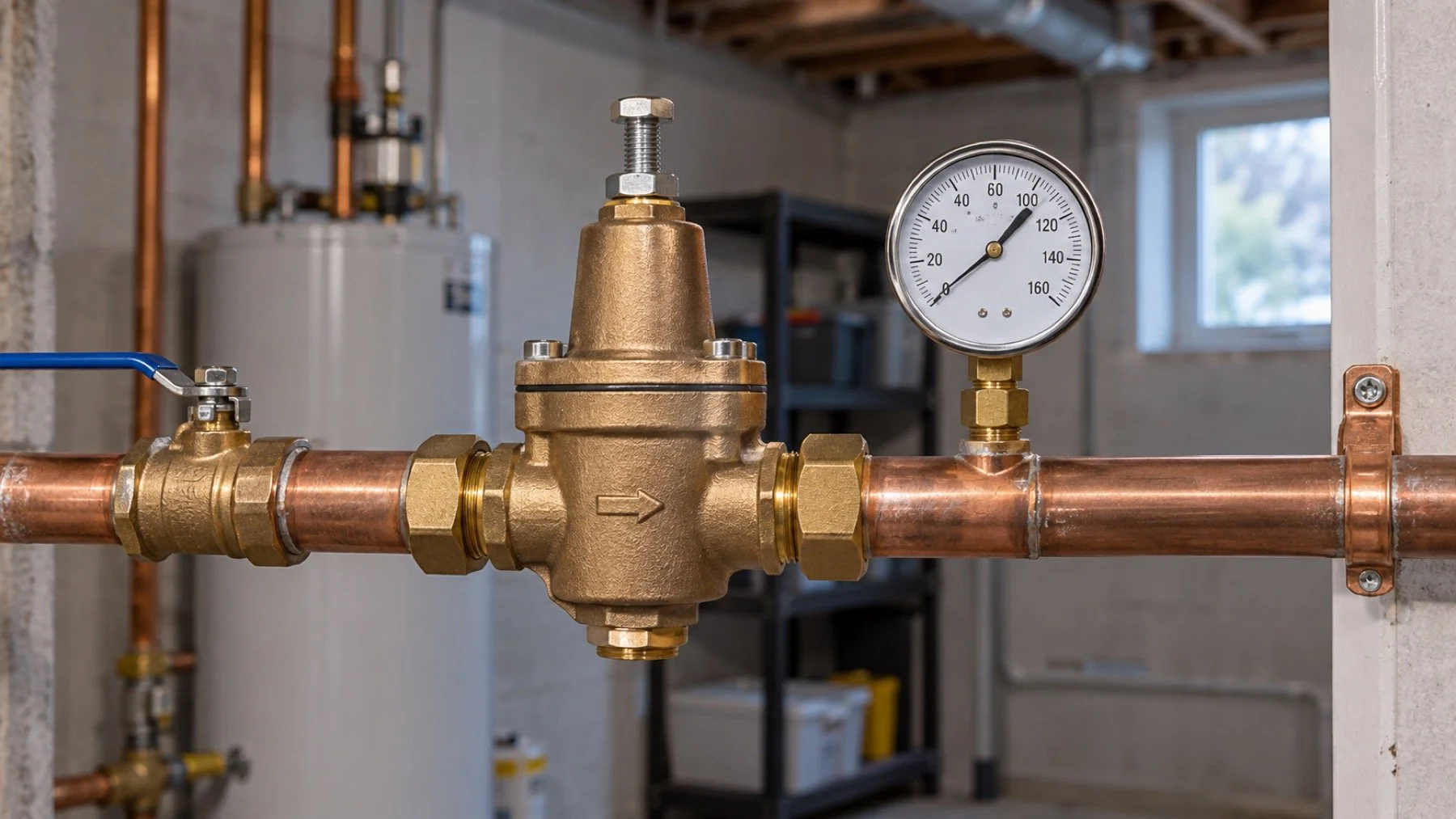
A sharp bang at shutoff, a supply connector that keeps weeping, or fixtures that feel unusually aggressive can point toward high or unstable incoming pressure. Those symptoms do not prove the pressure reducing valve is the cause, but they justify a measured test.
High incoming pressure shows up as banging pipes, short fixture life and weeping supply connections, and a pressure reducing valve on the main line is what brings it back into range.We compare static pressure with pressure during use, then look at where the main enters, whether a pressure reducing valve already exists, and how the rest of the house behaves. Replacing a valve without recording those conditions can hide a supply problem or miss a different source of noise.
This failure catalogue shows what the symptoms mean, what a plumber measures, and what belongs in the replacement scope.
Failure pattern one: forceful flow at many fixtures
If several taps, toilets, and appliances show the same aggressive behaviour, check the main supply pressure before blaming individual cartridges. Compare fixtures on different floors and branches. A single noisy faucet still points first toward that faucet or its local valve.
Record whether the condition is constant or changes by time of day. Municipal pressure can vary, and a failing regulator may respond differently under changing demand.
Failure pattern two: noise when valves close
Fast closing appliance valves can create a pressure wave. High pressure can make that event stronger, but loose supports, missing arrestors, and worn valves can also create noise. The test has to connect the measured pressure with the exact trigger.
Do not keep cycling a violent bang. A short recording and a list of the fixtures involved give the plumber safer evidence.
Failure pattern three: recurring seepage at weak points
Toilet fill valves, faucet cartridges, relief devices, and flexible connectors can reveal system stress, but age and wear still matter. When several unrelated parts begin leaking in a similar period, incoming pressure deserves attention.
Repair active leaks first. Then inspect the regulator, shutoffs, visible piping, and expansion conditions so the recommendation addresses the complete system rather than one damaged fitting.
Measure before selecting a valve
A plumber can record static pressure with fixtures closed and dynamic pressure while water is flowing. The difference shows how the supply and regulator behave under demand. The service size, expected flow, connection type, and accessible installation space guide valve selection.
The target setting must follow the building conditions, code, and selected product. This article does not supply a universal pressure number because the correct value must be confirmed for the actual system.
Plan access and the closed system effects
The valve belongs near the incoming main where it can be isolated and serviced. A finished ceiling, tight cabinet, or buried shutoff can turn a simple component change into access work. Photograph the main, meter, and nearby valves before the visit.
Changing pressure behaviour can affect thermal expansion and other controls. The plumber should assess the system after adjustment, verify fixture behaviour, and leave the valve accessible for future testing.
How to investigate a pressure pattern
Turn a pressure complaint into measurements
Static pressure is measured while no water is flowing. Dynamic pressure is observed while fixtures run. Both matter because a house can show an acceptable resting reading and a large drop under demand, or a high resting reading with otherwise normal flow. Record where the gauge is connected, the time, which fixtures are open, and whether the reading changes after the system has been idle.
A single reading at a hose connection does not explain every symptom. Compare branches and floors, inspect the existing regulator if present, and note any pressure producing equipment. If hot water behaviour differs from cold water behaviour, the investigation may also need to consider expansion and water heating components within the appropriate trade scope. Keep the measured facts separate from the suspected cause.
Do not adjust an unknown valve repeatedly in search of a comfortable shower. The adjustment range, condition, and downstream response have to be understood. A worn regulator may not hold a stable setting. A partially closed shutoff or restricted service can create low flow that feels like low pressure even when the static reading looks high.
Read symptoms as a group, not as proof
Water hammer is a pressure wave created when moving water stops quickly. High pressure can make the event more forceful, but fast closing valves, loose pipe, missing support, and equipment connections can also contribute. Record the exact fixture that triggers the sound and whether it occurs on opening, closing, or both. That detail helps distinguish a house wide pressure issue from a local mechanical event.
Recurring failures across unrelated fixtures are more informative than one worn cartridge. Look for fill valves, supply connectors, faucet parts, relief devices, and appliance valves that have failed or seeped within a similar period. Age, installation quality, and product condition still matter. Pressure is a candidate to measure, not a conclusion to announce from the damage alone.
When several symptoms share the same supply, measure that common condition before replacing each visible weak point in isolation. The result may still lead to fixture repairs, but the pressure record explains whether those failures are related or simply separate parts reaching the end of service.
Scope the replacement around the main line
A replacement plan should identify service size, pipe material, available straight length, shutoff condition, meter location, drainage for the shutdown, and access around the work. The regulator has to suit the expected flow and pressure conditions. The installation also needs support so the weight and service force do not load older piping.
After installation, set and verify the downstream pressure under the conditions specified for the valve and building. Run several fixture combinations and watch recovery. Recheck visible joints, noise triggers, and the fixtures that originally showed trouble. A stable gauge reading paired with unresolved banging still calls for investigation of supports, arrestors, or local valves.
Keep the model, size, set point, installation date, and before and after readings with the house records. Make the main shutoff and regulator reachable. If a future owner reports low flow, that record shows the intended starting condition and prevents an uninformed adjustment from becoming the first response.
Know when the regulator is not the whole answer
A normal pressure record does not dismiss a real complaint. Low flow can come from a partly closed valve, restricted pipe, clogged fixture aerator, treatment equipment, or a local cartridge. Noise can come from unsupported piping or fast closing valves. A regulator replacement should follow evidence that the incoming and downstream pressure behaviour actually calls for it.
The opposite is also true. Replacing a noisy appliance valve may quiet one event while high pressure continues to stress other components. Compare the house wide pattern, not just the loudest fixture. When the gauge, symptom timing, and common supply point agree, the repair scope becomes easier to explain and verify.
After any change, ask for the recorded readings and the conditions used for them. Keep those with the valve model and setting. If the symptom returns, the next plumber can compare current performance with the commissioned result instead of starting from an undocumented adjustment screw.
Prepare the pressure service call
List the fixtures involved, the time the symptom occurs, and whether it affects hot water, cold water, or both. Include a short recording of the noise, photos of the main entry and any existing regulator, and the age or recent history of failed parts when known. Do not change the regulator setting before the visit.
If you have a gauge reading, record the connection point and whether fixtures were running. Treat a homeowner reading as useful context, not as a complete diagnosis. Seal Plumbing can verify the conditions, inspect the accessible main line components, and define whether regulation, local fixture work, support, or further investigation belongs in the scope.
Judge the result by stable operation
Pressure control is a system decision. The gauge record, service size, valve selection, expansion conditions where applicable, pipe support, and fixture symptoms belong in the same assessment. When those pieces are documented, the homeowner can judge the completed work by stable operation instead of by one quiet day.
Ask whether the pressure pattern changes overnight, during irrigation, when several fixtures operate, or after municipal work. Those observations can guide when measurements are taken. They do not replace a gauge, but they can reveal a condition that a brief daytime visit would miss. When the issue is intermittent, agree on what the homeowner can record safely and when a return test is justified. A repeatable record is more useful than turning the adjustment higher or lower each time the house feels different.
Compare pressure symptoms with related house plumbing
Pressure diagnosis often overlaps service work, water hammer, and low flow investigation.
The 2024 Ontario Building Code came into force on January 1, 2025. That date matters when pressure control work forms part of a new or altered plumbing installation. current Ontario Building Code information.
Code aware next step for pressure symptoms
Send a list of affected fixtures, when the symptoms occur, and photos of the incoming main. Seal Plumbing can test the system and define the appropriate plumbing repair.