
PEX or Copper for a GTA Renovation? Questions That Decide the Choice
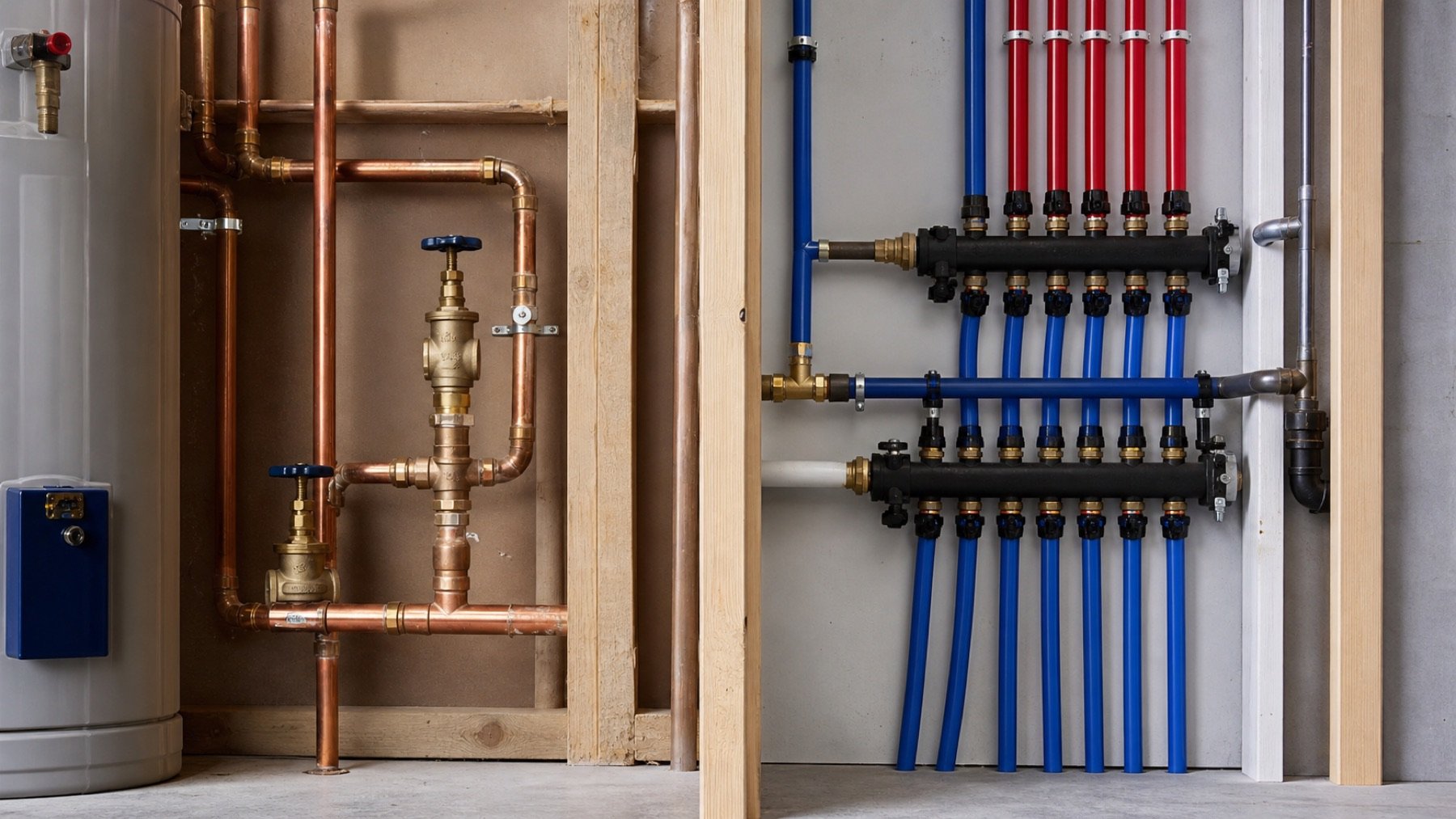
Choosing PEX or copper for a GTA renovation starts with the pipe route, access and the existing system. Both the material and the installation method belong in the comparison. Seal Plumbing's residential plumbing services include water pipes and system planning, where those decisions need to be made before finishes close the walls.
A useful proposal explains why a particular system suits the work. It names the pipe and fittings, describes how they connect to existing plumbing and identifies testing and access requirements. Comparing only the price of a length of pipe leaves out much of the renovation.
Start with what is staying and what is being replaced
Mark the fixtures included in the project. Is the work limited to a new ensuite, or will it replace branches serving several rooms? Ask which existing lines will remain and where the new installation begins. A proposal for an entire supply system is different from one that extends a single branch.
In a finished house, access can shape the material choice. The installer needs a workable route around framing, services and areas that should remain undisturbed. In an open renovation, there may be more freedom to plan direct runs and connections. Neither situation justifies drilling or cutting without considering the building structure.
Ask for the route to be discussed on site, including sections hidden behind cabinets or ceilings. A drawing does not need to show every fastening detail to be useful. It should make the intended path and the boundary of replacement understandable before you compare quotes.
Account for the work around the pipe
Make access openings, protection of the home and finish restoration separate points in the scope. One quote may include opening and reinstatement while another assumes those tasks belong to your renovator. Without that distinction, a lower total can simply reflect less work.
Keep fixture selections available. The number and arrangement of fixtures affect system planning. Tell the plumber about simultaneous uses that matter to you, such as a shower running while laundry is underway. Pipe material alone does not determine the water delivery you will experience.
Compare the complete connection systems
PEX is flexible tubing used with compatible connection methods. Copper installations also rely on an appropriate joining system and workmanship. In either case, ask what pipe, fittings and joining method are proposed. A material name on a quote is not a complete specification.
Uponor's PEX guidance is specific to its products and system requirements. Use the selected manufacturer's current instructions to check compatibility, exposure limits and installation details. Do not transfer one manufacturer's warranty or installation allowance to every product labelled PEX.
The practical question is whether the proposed parts belong together in the intended application. If several connection types will meet in the renovation, ask where the transitions occur and how they will be documented. Keep the product information with the completed project rather than relying on someone remembering the fittings years later.
| Project question | PEX discussion | Copper discussion |
|---|---|---|
| How will the line follow the route? | Permitted bends, support and protection for the selected tubing | Layout, joints and room to use the selected joining method |
| What connects to the existing system? | Compatible transition fittings and identified retained pipe | Suitable transitions and condition of retained copper |
| What exposure needs attention? | Manufacturer limits for light, temperature and nearby materials | Freezing exposure, water conditions and physical protection |
| How will future service work? | Known system and accessible isolation where planned | Documented joint method and access to serviceable components |
Give exposure its own place in the decision
Light and nearby materials matter for PEX
Tell the installer if the proposed route receives sunlight or will remain exposed near equipment. Ask how the product's limits will be respected during storage and after installation. The answer should identify the selected product and the protection needed at the actual location.
A general statement that plastic pipe is suitable indoors does not answer questions about a particular mechanical area. Likewise, a line hidden behind a wall may have contact with other materials that must be considered. Let the product instructions guide those details instead of choosing from a photograph of another home's installation.
Copper needs a suitable operating environment too
The Copper Development Association's design guidance discusses water conditions, flow and installation factors that affect performance. Copper should not be described as immune to corrosion or freezing. Existing deterioration needs an explanation before the same route is simply rebuilt.
If an old copper line has repeated leaks, ask which evidence points to a local defect and which points to a broader issue. Replacing one section can be appropriate, but the decision should consider the history and visible condition. Material preference does not replace that assessment.
Keep freeze protection separate from material preference
A pipe in a cold exterior wall deserves an exposure review whichever material you choose. Do not accept a promise that a material makes freezing harmless. The installation still needs an appropriate route and protection, and any past freeze damage should be disclosed.
Describe rooms that become unusually cold and any line that has stopped supplying water during winter. Ask whether the renovation can improve the route while access is available. That may be a more useful investment than replacing pipe in the same vulnerable position.
Insulation and air sealing can also involve the renovator. Agree who handles those details before the plumbing is covered. A completed pipe installation and an unfinished building enclosure can leave the overall project unresolved even when the new joints have been tested.
Compare costs at the same boundary
Ask both proposals to cover the same fixtures, retained piping and access conditions. Separate material, installation, valve changes, testing and restoration where the scope would otherwise be unclear. There is no useful universal price comparison without knowing what each quote includes.
Do not choose a system solely because it has fewer visible joints or looks neater in a project photo. Those observations can prompt questions, but they do not prove sizing, compatibility or workmanship. Seal's project gallery can help you discuss the kind of work involved; your own installation still needs its own design.
Warranty terms should be checked against the actual products and installer documentation. Ask what records you will receive and who handles a future service concern. Distinguish a manufacturer's product warranty from the contractor's responsibility for the work.
Ask for the material decision in writing
Before approving the plumbing scope, confirm the selected pipe system, the reason it suits the route, the retained connections and the intended testing. Add any limitations the installer identified, including unknown concealed conditions. That gives later changes a clear reference point.
Discuss the renovation's water piping with Seal Plumbing using your layout and fixture list. The useful question is which complete installation suits this property and why. The answer should make the route, connections and access understandable before you commit to either PEX or copper.