
How to Fix a Leaky Faucet and When the Valve Needs Replacement
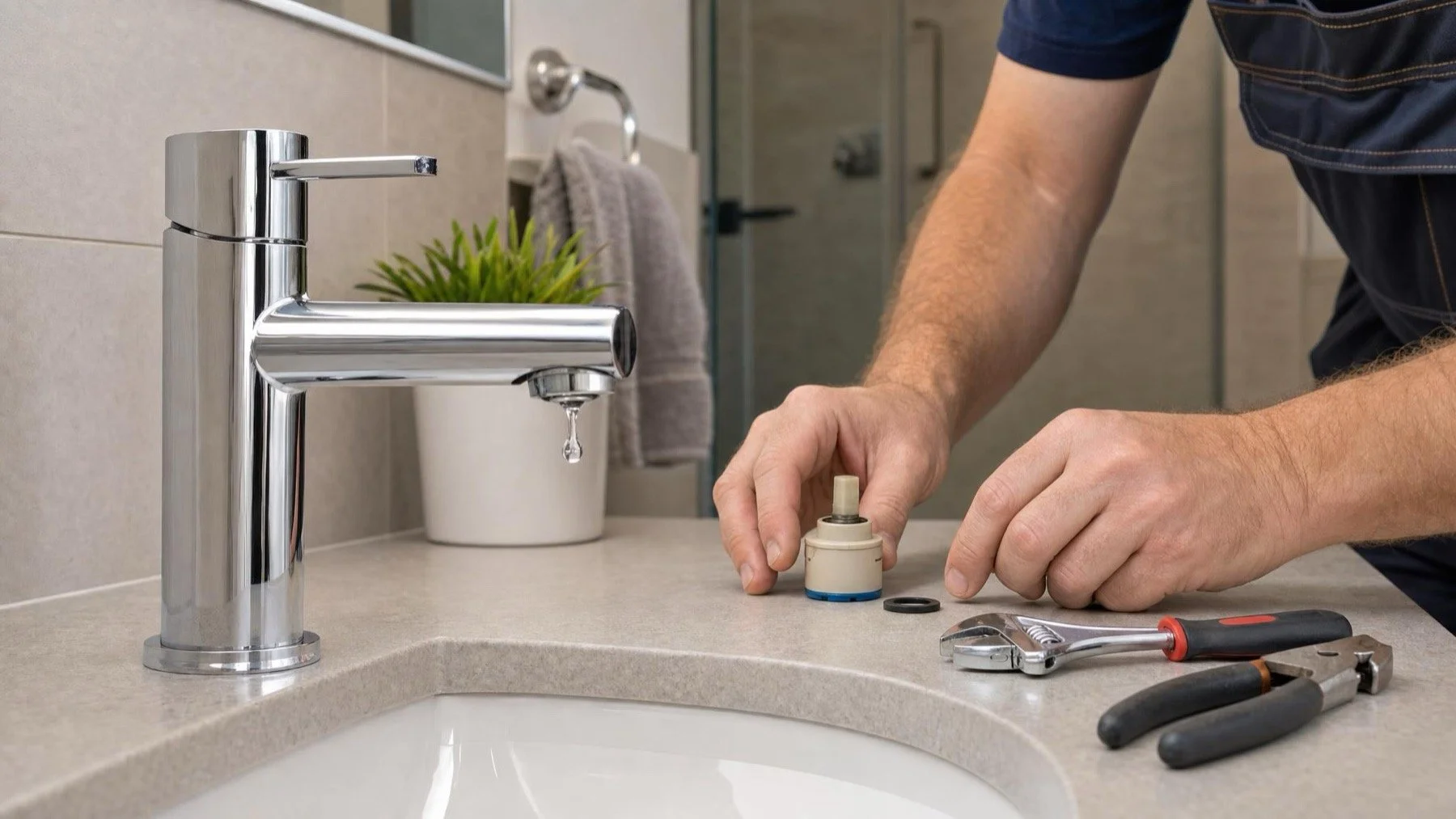
A drip from the spout usually means water is passing an internal seal. Water around the handle points toward a different seal, while moisture below the sink may come from the supply, drain, or faucet mounting area. Start by finding the exact leak path.
The correct part depends on the faucet design and model. A cartridge for one brand can look close to another and still fail to seal. Photograph the faucet, any label, and the removed part before buying a replacement.
Our first job is identifying where the water is escaping. A drip at the spout, moisture around the handle and water below the sink point to different parts, so replacing a random cartridge can waste time and leave the real leak untouched.
Identify the faucet mechanism
Compression faucets use washers against a valve seat. Many single handle and two handle faucets use cartridges, ceramic discs, or ball assemblies. The handle shape alone does not prove what sits inside.
Check the manufacturer’s parts diagram when it is available. Matching stem length, tabs, seals, and hot or cold orientation saves repeat disassembly.
Isolate water without creating a second leak
Close the fixture stops gently and open the faucet to confirm isolation. If a stop is seized, corroded, or still passes water, pause. Forcing it can create a cabinet leak that is harder to control than the original drip.
Protect the sink drain before removing small screws or clips. Arrange parts in order and avoid scratching decorative finishes with bare tools.
Clean, inspect, and replace the worn part
Mineral scale can prevent a new seal from sitting flat. Clean the accessible sealing surface with a product suitable for the fixture, then inspect for pitting, cracks, and distortion. Lubricate only with material approved for potable plumbing components.
A new washer on a badly damaged seat may drip again. A new cartridge in a corroded valve body may also fail to solve leakage around the casting. The surrounding condition decides whether a part repair is worthwhile.
Know when replacement is the better scope
Replace the faucet or valve when the body is cracked, corrosion has damaged sealing surfaces, correct parts are unavailable, or repeated repairs no longer hold. For a wall mounted or concealed valve, access and trim compatibility become part of the decision.
If flow is weak rather than dripping, remove and check the aerator first. The low water pressure guide explains when a wider supply problem is more likely.
Test before closing the job
Restore water slowly, operate hot and cold through the full range, and inspect the handle, spout, supply connections, and cabinet. Dry each area first so a fresh bead of water is easy to spot.
Persistent leakage calls for professional repair service. Tell Seal Plumbing where the water appears and whether the local stops operate.
Frequently asked questions
Why does my faucet drip after I changed the cartridge?
The cartridge may be incorrect, installed in the wrong orientation, damaged during insertion, or sealing against a worn valve body.
Can I repair a faucet without shutting off the main water?
Use working fixture stops when they fully isolate the faucet. If they do not, the next safe upstream shutoff is required.
Is a leaking handle the same repair as a dripping spout?
Not always. Handle leakage often involves an upper seal, while a spout drip means the closed valve is still passing water.
Should I replace both hot and cold cartridges?
Replace only what diagnosis and condition justify, unless age, matching wear, or manufacturer guidance supports doing both.
Why is the faucet flow weak after repair?
Debris may have moved into the aerator or cartridge. Check the aerator and confirm the supply stops are fully open.
Show us where the water appears
Take a clear photo of the faucet, any brand label and the area below the sink. Contact Seal Plumbing when the shutoff is unreliable, the body is corroded or the leak continues after a correct repair.