
Shower Valve Replacement: Signs, Access, and Renovation Timing
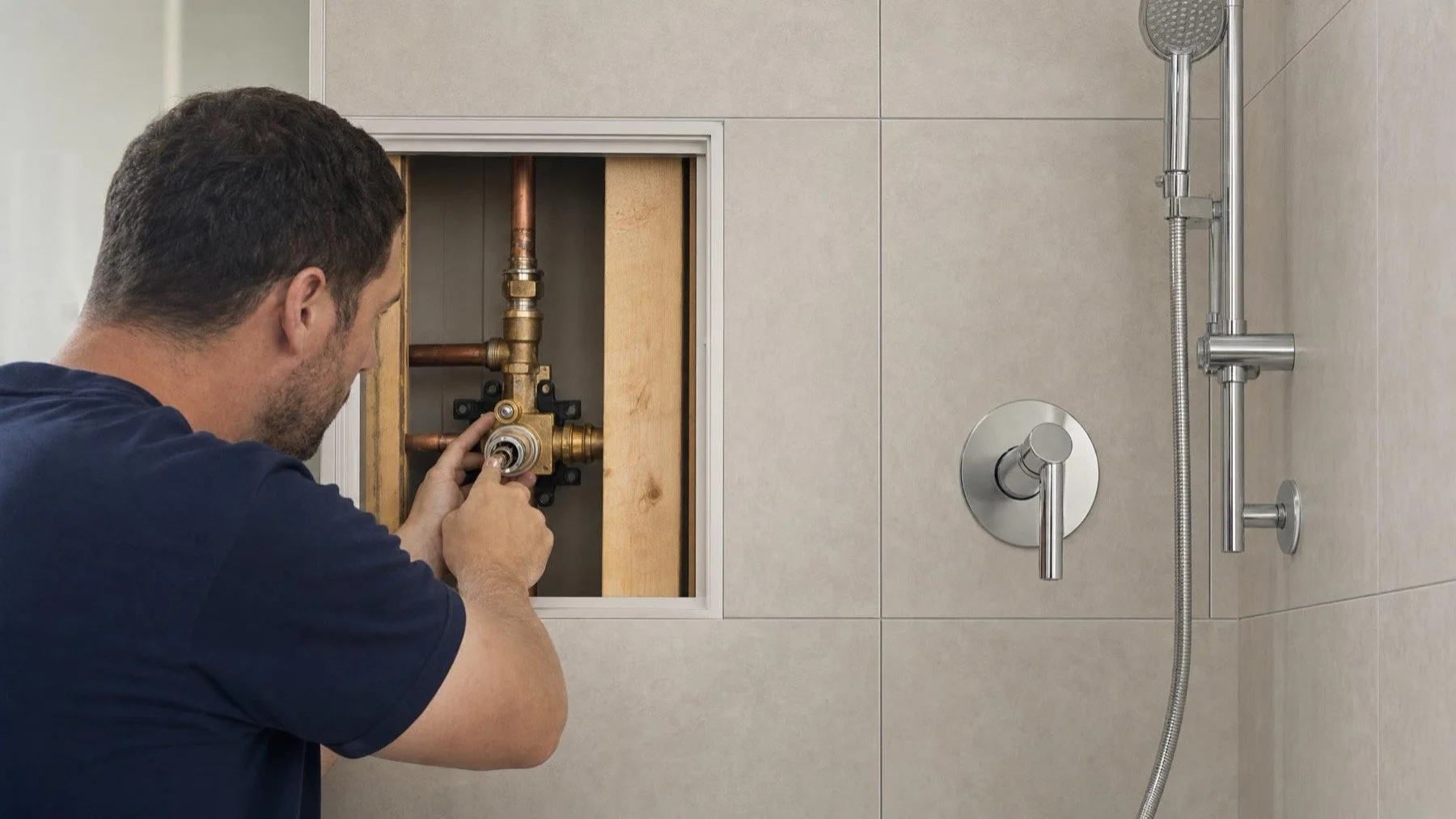
A shower valve controls flow and mixes hot and cold water behind the finished wall. When the valve body leaks, trim is obsolete, temperature control is unreliable, or parts no longer restore operation, replacement becomes the durable option.
The hidden location makes planning important. The plumber needs a sound connection, correct valve depth, compatible trim, and a way to pressure test before the access is closed.
We do not open a finished wall until we have checked whether the cartridge, trim or valve body is actually at fault. That distinction can turn a wall-opening project into a smaller service repair.
Separate cartridge trouble from valve body failure
A stiff handle, drip, or temperature problem may come from a replaceable cartridge. Diagnosis starts with the exact valve model and the condition of the body where the cartridge seals.
Replacement becomes more likely when the casting is cracked, internal surfaces are damaged, connections leak behind the wall, or no supported trim and service parts remain.
Choose the least disruptive access
An opening from an adjacent closet or drywall wall can preserve shower tile. When the back is inaccessible, the plumber may use a renovation plate or coordinate tile removal from the shower side.
Access must be large enough for safe cutting, preparation, connection, and inspection. A tiny opening that hides joints before testing creates risk rather than saving finishes.
Set valve depth from the finished wall
Manufacturers mark an acceptable depth range based on the finished surface, not the stud face. Tile thickness, backer, waterproofing, and trim design all affect the final position.
A valve set too deep can prevent trim from fitting. One set too far forward can leave gaps. During renovation, confirm the complete wall build before fixing the valve.
Coordinate trim, functions, and protection
The rough valve and visible trim must belong to a compatible system. A simple shower, tub and shower, hand shower, or diverter arrangement uses different controls and outlet planning.
Pressure balance or thermostatic functions should match the intended use and applicable requirements. Product selection should be complete before rough in, not after tile.
Use renovation timing to your advantage
Replacing the valve while walls are already open reduces finish disruption and lets the plumber review supply lines, supports, and outlet placement. The bathroom renovation cost guide explains how plumbing fits into the larger sequence.
For an occupied bathroom, protect the work area and confirm how long the shower will be unavailable. Seal Plumbing handles residential plumbing and renovation work across the GTA.
Frequently asked questions
Can a shower cartridge be replaced without opening the wall?
Often yes when the valve body is sound and the correct cartridge is available through the trim opening.
Can a plumber replace the valve from behind the shower?
Yes when an adjacent wall or closet provides suitable access. The opening still needs enough room for connections and testing.
Will new trim fit an old shower valve?
Only when the manufacturer confirms compatibility. Similar appearance does not make different valve systems interchangeable.
When should the valve be installed during renovation?
Set it after the layout and wall build are known, then test it before waterproofing and finish work conceal the connections.
Why does shower temperature change suddenly?
A worn cartridge, pressure imbalance, supply problem, or valve issue can cause swings. Diagnosis should cover the full system.
Plan access before opening the wall
Send photos of the trim, the opposite side of the shower wall and any model information you can find. Contact Seal Plumbing to review the least disruptive replacement path.