
Replacing a Garburator: Connections and Clearances to Confirm First
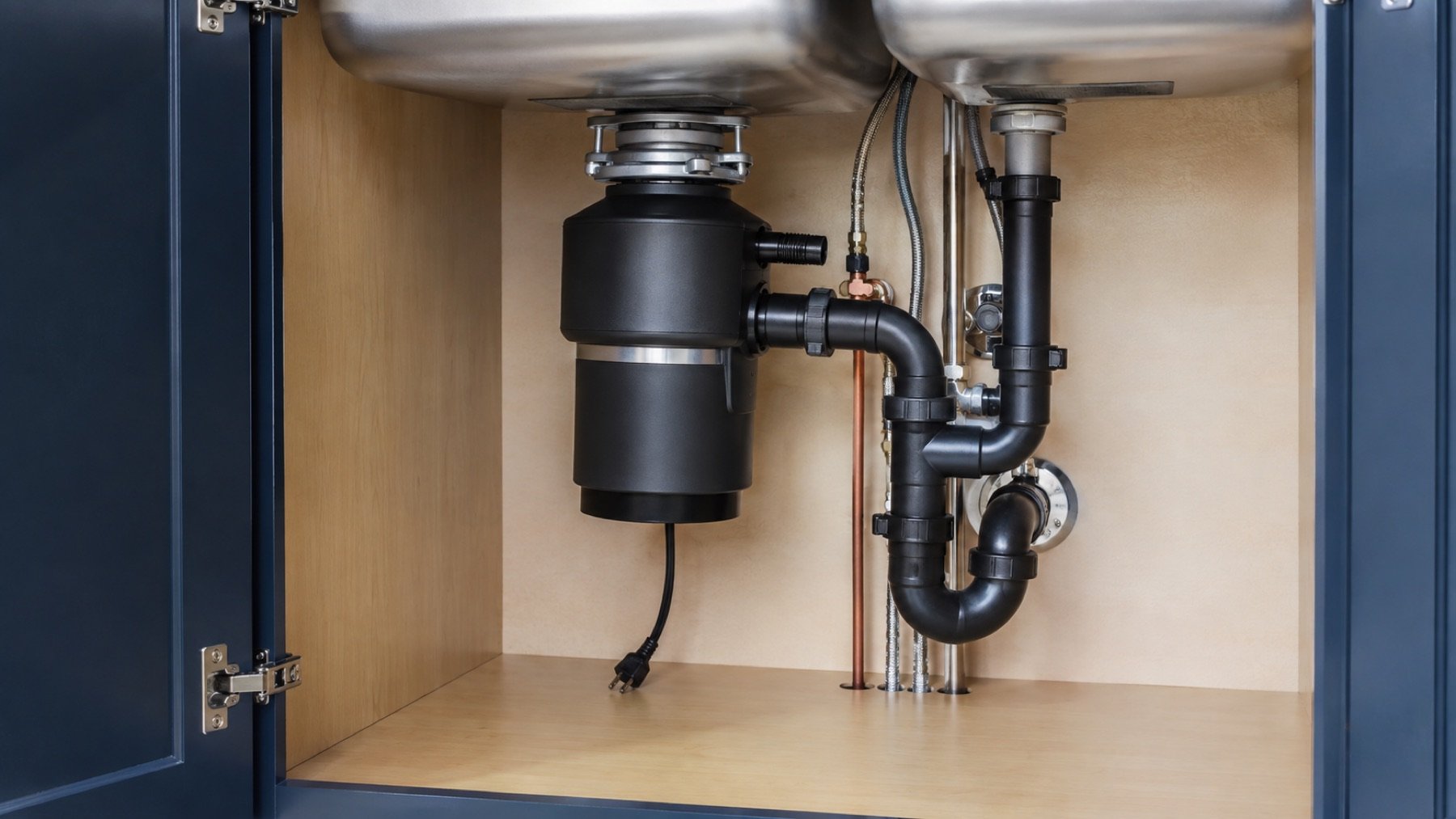
Before replacing a garburator, confirm that the proposed installation is permitted at your property and that the new model fits the existing sink, cabinet and drain. An old unit already hanging under the sink does not establish either point. Seal Plumbing's residential kitchen plumbing services can be the starting point for discussing the surrounding plumbing scope.
Check the sewer arrangement before buying a unit
Toronto's Municipal Code, Chapter 681, section 681-10 E prohibits domestic garbage grinding devices discharging directly or indirectly to a storm or combined sewer. Confirm the property's sewer connection and applicable requirements before buying or replacing a disposal. This rule is not a blanket statement that every Toronto property has the same sewer arrangement.
For another GTA municipality, check its own sewer rules. In a condo, also ask management about building requirements and approval for alterations. A manufacturer's compatibility statement does not settle municipal or building permission. If you cannot confirm the connection, resolve that question before arranging installation.
A replacement should also address the reason the old unit is coming out. Describe whether it leaks, fails to operate, has damaged mounting parts or simply does not suit your needs. A blocked building drain is a separate concern. Replacing the appliance will not establish that the receiving drain is clear.
Compare dimensions at the connections
Keep the proposed model's dimensional drawing beside photographs of the existing installation. Overall height matters, but so do the position of the outlet, the width of the housing and the space needed to make the connections. Include any pull out bins or shelves occupying the same cabinet.
- Identify the sink and existing mounting assembly.
- Show the disposal outlet and its route to the trap and wall drain.
- Photograph any dishwasher connection to the unit.
- Record the available cabinet space without removing plumbing.
- Keep the new model's installation manual and part number.
Do not assume a disposal can be made to fit by changing the drain into whichever shape leaves room. The plumber needs to assess the complete drainage arrangement. If the new outlet sits differently, the surrounding pipework may need an appropriate alteration rather than a simple reconnection.
Mounting systems need a model check
Moen's disposal selection information describes its mounting options. Use the instructions for the specific replacement to confirm what can be retained and what needs changing. A familiar looking ring is not enough to identify compatibility.
Ask the installer to include the sink connection and seal in the assessment. Reusing a mounting assembly should be an informed choice based on the selected model and existing condition. It should not be a surprise discovered after the old disposal is removed and the kitchen sink is unavailable.
Assign electrical work separately from drain work
The replacement's power connection needs to match its instructions and the permitted installation. Tell the installer whether the existing disposal uses a plug and receptacle or a fixed connection, if you can identify it safely. Do not open electrical covers to obtain that information.
Confirm who will handle any electrical changes. A plumbing booking should not silently include electrical alterations, and a unit supplied with a cord should not be assumed suitable for every existing setup. Keep water and electrical troubleshooting separate if the current unit is leaking.
Do not reach inside a disposal or remove it as a preliminary check. If it is malfunctioning, leave it out of use and describe the fault. The manufacturer's service instructions determine how it can be isolated and assessed safely.
Price a removal option alongside replacement
If permission or compatibility remains unresolved, ask what restoring the sink to ordinary drainage would involve. That discussion should include the sink outlet, trap arrangement and any dishwasher connection currently using the disposal. Removing the appliance still leaves plumbing work to complete. It is not enough to disconnect the motor and leave unused openings beneath the sink.
Compare the two scopes on the same basis. A replacement proposal should identify the chosen unit, compatible mounting parts, drain alterations and electrical responsibility. A removal proposal should identify how the sink and connected dishwasher will drain afterward. Include cabinet access and any finish repairs in either discussion so that the lower appliance price does not hide other work.
You can also delay purchasing while the receiving drain is assessed. If the kitchen has repeated backups, explain which bowl fills and whether the problem occurs when the dishwasher empties. Those observations help define the drainage investigation. Do not run either appliance to recreate a backup while water is already escaping into the cabinet.
The dishwasher inlet needs its own completion check
A new disposal may arrive with its dishwasher opening closed. In Moen's INS10719E installation instructions, that opening has a removable plug, and the manufacturer warns against reusing the plug after removal. The procedure differs from instructions that tell an installer to knock out an internal closure. Match the instructions to the exact unit rather than combining steps from different videos.
Tell the installer whether the dishwasher uses that inlet before the disposal is mounted. If it does, the connection must be prepared and secured according to the selected equipment instructions. If it does not, an unused opening must remain correctly closed. This is one reason to check the dishwasher connection even when the replacement motor runs normally.
Before the appointment, empty movable contents from the sink cabinet and arrange access to the equipment information. Leave the attached pipes, wiring and mounting ring in place. The installer needs to see the original arrangement, and removing pieces early can make a leak or compatibility problem harder to trace.
Ask how long the sink and dishwasher will be unavailable and what would cause the installation to pause. Missing mounting hardware, an unsuitable outlet position or unresolved electrical work should have a clear response. Confirm who supplies any additional parts and whether a changed scope needs your approval before work continues.
The handover should leave you with operating instructions for the installed model and an explanation of the connections that changed. Where disposal installation cannot proceed, document the reason and the agreed alternative for the kitchen sink. A usable, correctly connected sink is the practical outcome to plan around.
Include the connected appliances in the final test
A dishwasher may drain through a connection at the disposal. That connection needs attention during replacement even if the dishwasher itself is unchanged. Ask the installer to verify the selected unit's connection procedure and test the linked drainage before completing the job.
After installation, the checks should cover the mounting area, drain joints and any dishwasher connection under actual use. Ask for the model information and maintenance instructions to remain with the kitchen records. Avoid treating successful motor operation as the only completion check.
If there is already a drain or connection problem, review Seal's repair service scope. Then ask about your kitchen plumbing and proposed replacement, supplying the existing and proposed model details. Confirm that Seal accepts the specific disposal work before booking. Sewer permission, compatibility and trade responsibilities should be settled while you can still change the purchase.