
Backwater Valve Installation: How It Protects a GTA Home
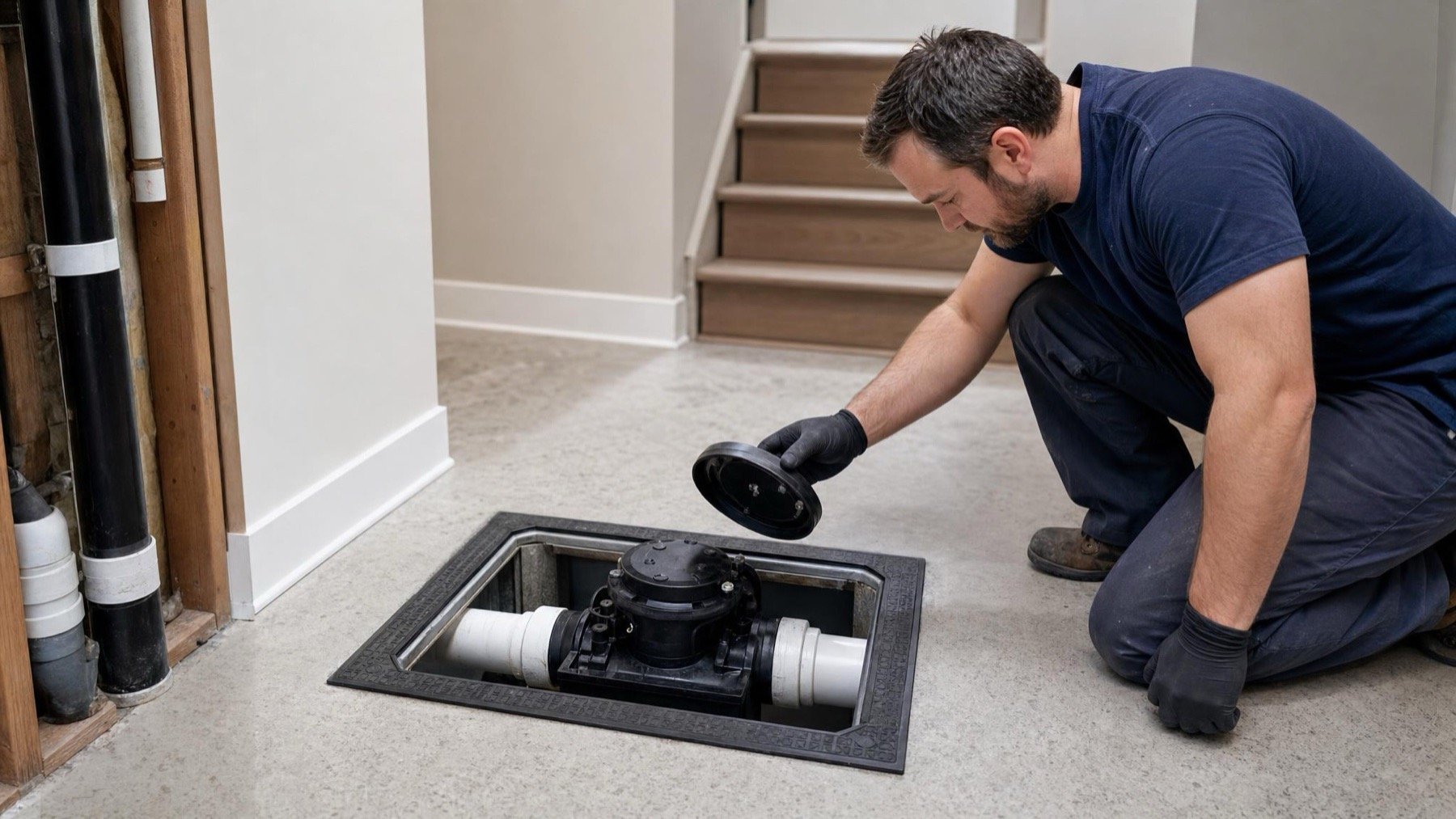
A backwater valve is a one way device installed on a building drain. Under normal conditions, wastewater leaves the home. When a municipal sewer surcharge pushes flow back toward the property, the valve flap closes to help keep sewage from rising through low fixtures and floor drains.
The valve reduces one specific risk. It does not pump groundwater, stop every path of water entry, or replace good lot drainage. Correct placement, access, and maintenance determine whether it can do its job.
We start with the drain layout, not a valve catalogue. The device only protects the fixtures connected on the correct side of it, so tracing the building drain is part of the job.
Start with the building drain, not the product
A plumber first confirms how the home connects to the municipal sewer, which fixtures are upstream of the proposed valve, and whether branch drains create another path into the basement. Installing a valve on the wrong line can leave important fixtures unprotected.
Older GTA houses may have finished floors over the drain, additions with altered piping, or storm and sanitary connections that need to be traced. A camera inspection or drain locating work may be part of planning.
What installation usually changes
A typical installation requires opening a controlled area of the basement floor, exposing the building drain, cutting in the approved valve body, and restoring the pipe with correct grade. The access cover must remain reachable after the floor is repaired.
The plumber tests flow and flap movement before closing the excavation. Where a permit or inspection applies, the work sequence must leave the installation visible at the required stage. Confirm local requirements for the property before work begins.
Backwater valve versus sump pump
A backwater valve responds to sewage moving backward in the sanitary drain. A sump pump removes groundwater collected in a sump basin. The devices solve different problems, although some homes need a broader flood reduction plan that considers both.
Read the sump pump planning guide if water enters around the foundation or collects beneath the slab. Do not treat a sump pump as a substitute for diagnosing sewer backup.
Use and maintenance after installation
When the flap closes during a surcharge, wastewater from the home cannot leave through that drain. Avoid showers, laundry, dishwashing, and repeated flushing until normal drainage returns. Continuing to add water can create a backup on the house side of the valve.
Keep the cover visible. Periodic inspection removes debris from the sealing area and confirms that the flap moves freely. Record the valve location for future owners and contractors.
Questions for a GTA installation quote
Ask which fixtures the valve protects, how the drain route was confirmed, whether permits or municipal programs affect the scope, and how flooring will be handled. Confirm the valve model, access size, testing method, and maintenance instructions.
Seal Plumbing can review the drain layout as part of its service and repair work. Use the contact page to share backup history and basement photos.
Frequently asked questions
Does every GTA home need a backwater valve?
No. Risk depends on drainage layout, local conditions, past backups, and municipal requirements. A property assessment is the right starting point.
Can I use plumbing while the valve is closed?
Avoid using connected fixtures. Wastewater has nowhere to go while the closed valve blocks the building drain.
Can a backwater valve stop rainwater in a basement?
It only addresses reverse flow through the protected drain. Foundation leaks, surface water, and groundwater need separate investigation.
Does the valve need maintenance?
Yes. The access cover should remain reachable so the flap and sealing area can be inspected and cleaned.
Will installation damage the basement floor?
The plumber usually opens a defined section to reach the drain. Ask what excavation and floor patching the quoted scope includes.
Plan the valve around your actual drain
Share your backup history, basement layout and any available drain records. Contact Seal Plumbing for a GTA backwater valve assessment.