
Dishwasher Plumbing Installation: Connections to Confirm Before Delivery
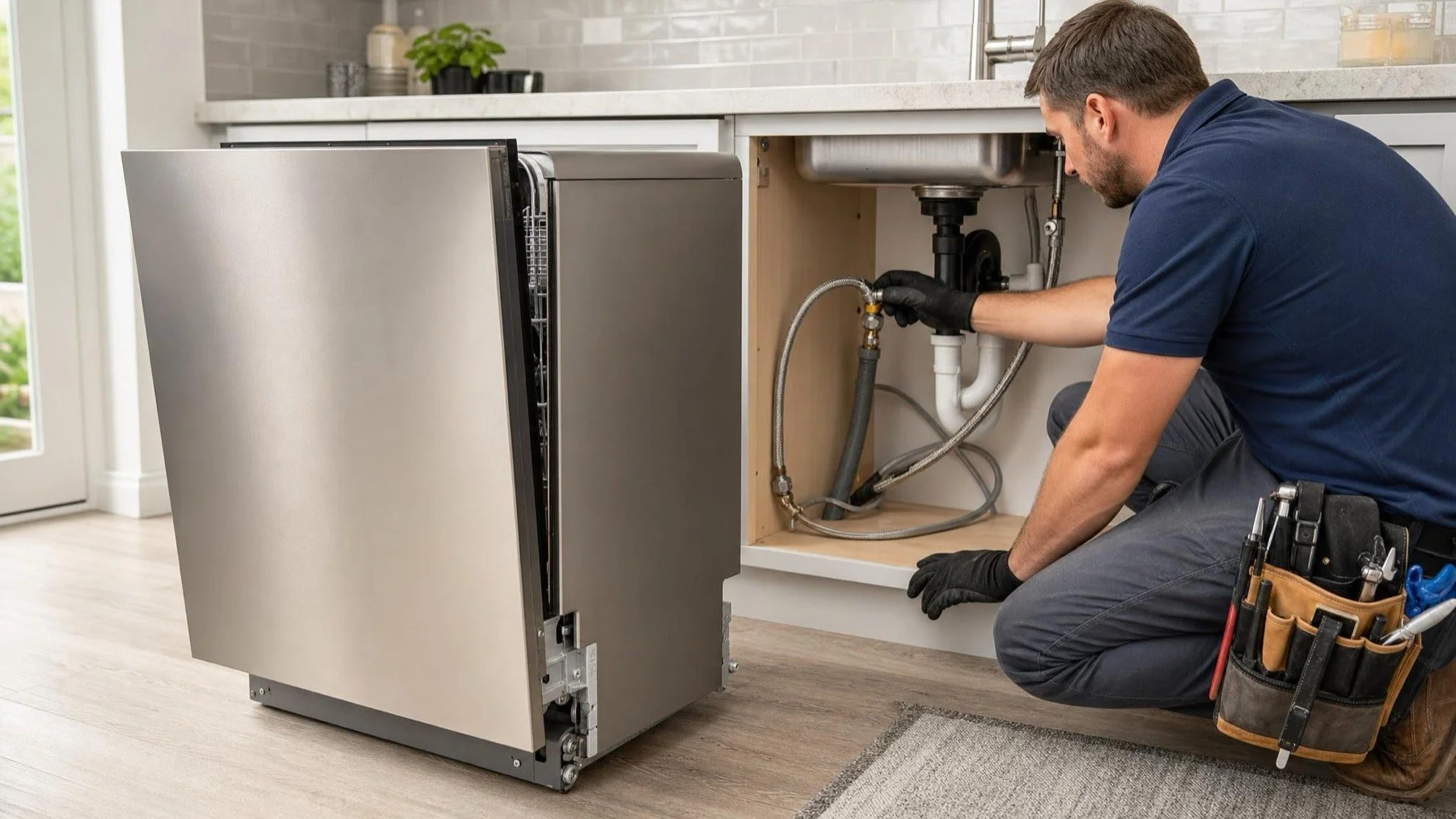
Appliance delivery does not fix an inaccessible shutoff, corroded supply, missing drain connection, or cabinet opening that pinches the hoses. Confirm the plumbing route before the dishwasher arrives.
A good installation keeps connections accessible, protects hoses from sharp edges, follows the appliance instructions, and prevents dirty sink water from flowing back toward the machine.
We would rather check the sink cabinet while it is empty than discover a seized valve and pinched drain hose with the delivery crew waiting. The appliance model and cabinet route should be part of the plumbing plan.
Verify the opening and route
Compare the appliance dimensions with the finished cabinet opening, floor height, counter, and door clearance. A new floor installed in front of an old dishwasher can trap the appliance below the counter.
Plan smooth openings between the dishwasher bay and sink cabinet. Hoses and cords should not rub on raw cabinet edges or interfere with drawers and waste bins.
Check the hot water supply
The dishwasher supply usually connects to an accessible hot water branch through a dedicated shutoff. Confirm the valve operates, the connection matches the appliance kit, and the hose can reach without tension.
A saddle valve, severe corrosion, or a stop hidden behind the appliance deserves correction before installation. Future isolation should not require pulling out a leaking machine.
Route the drain correctly
The drain hose must follow the manufacturer’s required high loop or approved air gap arrangement and connect at a suitable sink tailpiece or disposer inlet where applicable. Remove any required knockout before the hose is secured.
A low, sagging, kinked, or incorrectly connected hose can contribute to poor drainage, odour, or backflow. Keep the route supported and serviceable.
Coordinate plumbing and electrical work
A plumber handles the water and drain connections within scope. The power supply, receptacle, circuit, and disconnect requirements belong in the electrical plan. Do not assume the new appliance matches an old hardwired arrangement.
During renovation, coordinate cabinet, countertop, sink, plumbing, and electrical decisions. The kitchen plumbing rough in guide explains the sequence.
Test a full cycle
After levelling and securing the appliance as directed, inspect the supply while pressurized, check the drain connection during discharge, and confirm that the hose remains clear when the machine is pushed home.
Run the manufacturer’s test or a suitable cycle and look inside the sink cabinet with good light. Seal Plumbing offers residential plumbing services for GTA kitchen projects.
Frequently asked questions
Does a dishwasher need its own shutoff valve?
An accessible dedicated shutoff makes isolation and future service safer. The final connection must suit the installation.
Can the drain hose connect anywhere under the sink?
No. It needs an approved connection and routing that follows the appliance instructions and local requirements.
Why does sink water enter the dishwasher?
An incorrect drain connection, missing high loop, blocked drain, or disposal issue can allow backflow.
Can delivery installers correct old plumbing?
Services vary and often exclude corroded valves, new branches, cabinet changes, and drain corrections. Confirm scope before delivery.
When should plumbing be checked in a kitchen renovation?
Before cabinets and appliances are ordered, then again before delivery and final connection.
Check the connections before delivery day
Send the dishwasher model plus photos of the opening and sink cabinet. Contact Seal Plumbing if the shutoff, drain route or old connection needs correction.