
Water Shut Off Valve Replacement: When an Old Valve Cannot Be Trusted
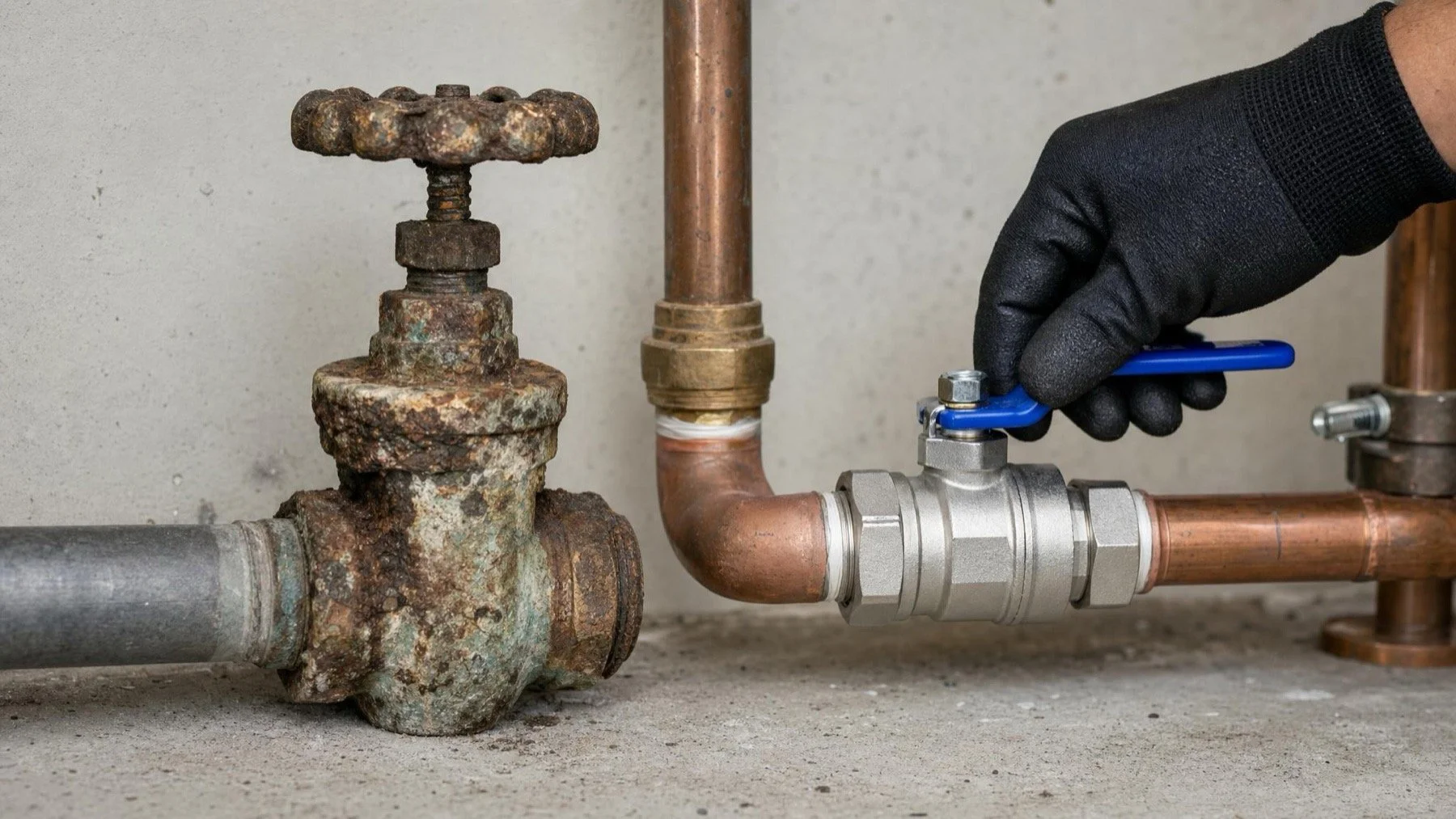
A shut off valve has one job during service or an emergency: stop water where expected. A handle that will not move, a stem that leaks, heavy corrosion, or continued flow in the closed position makes that valve unreliable.
The worst time to discover a failed valve is after a supply connector breaks. Testing and planned replacement give you controlled access, proper isolation, and time to choose the right valve.
We do not force an unknown valve just to see whether it moves. Before touching it, we want to know what isolates the line upstream and what happens if the stem or body starts leaking.
Recognize the failure mode
A seized valve may not move at all. A passing valve closes but still allows meaningful flow. Stem leakage appears around the handle during operation, while body or connection corrosion can indicate a broader weakness.
Do not judge isolation only by handle position. Open the downstream fixture after closing and allow pressure to fall, then observe whether flow stops as expected.
Do not force an unknown valve
Old multi turn valves can break internally or begin leaking when disturbed. If you do not know the next upstream shutoff, forcing the handle can turn a maintenance check into uncontrolled water damage.
Photograph the valve and nearby piping. Note whether it serves one fixture, a unit, a branch, or the whole property. That determines the isolation plan.
Plan upstream isolation and access
Replacing a fixture stop may require only a unit or main shutoff. Replacing a main building valve can require utility or building coordination. In condos, management may control the riser and notification window.
The plumber also checks pipe material, connection method, working clearance, bonding considerations where applicable, and whether nearby pipe needs support.
Choose a serviceable replacement
Quarter turn valves offer clear position and simple operation, but selection still depends on location, pipe, pressure, access, and code. A quality valve installed on poorly prepared pipe will not create a dependable result.
Keep important valves visible and label what they isolate. Concealing a main control behind fixed finishes creates delay during the next emergency.
Test and document the result
After installation, the plumber restores water gradually, checks every connection, operates the valve, and confirms downstream isolation. Trapped air may cause brief sputtering at fixtures as the system refills.
Seal Plumbing handles planned replacement through its service and repair work. Use the contact page to describe the valve location and condition.
Frequently asked questions
How do I know if a shut off valve is passing water?
Close it gently, relieve downstream pressure, and see whether meaningful flow continues. Do not force a suspect valve.
Can a leaking valve be tightened?
Some stem packing leaks allow adjustment, but corrosion, body damage, and internal failure require proper assessment.
Should every old valve be replaced at once?
Prioritize valves that leak, seize, fail isolation, serve critical areas, or will become inaccessible during renovation.
Who shuts off water for a condo valve replacement?
Building management often controls riser shutdowns. Follow the corporation’s booking and notice process.
What should be labelled after replacement?
Label the area or fixture the valve controls and keep access clear. Record the location in property documents.
Replace the valve on a controlled schedule
Share a clear photo, its location and what the valve is supposed to isolate. Contact Seal Plumbing before a seized or passing valve becomes an emergency.