
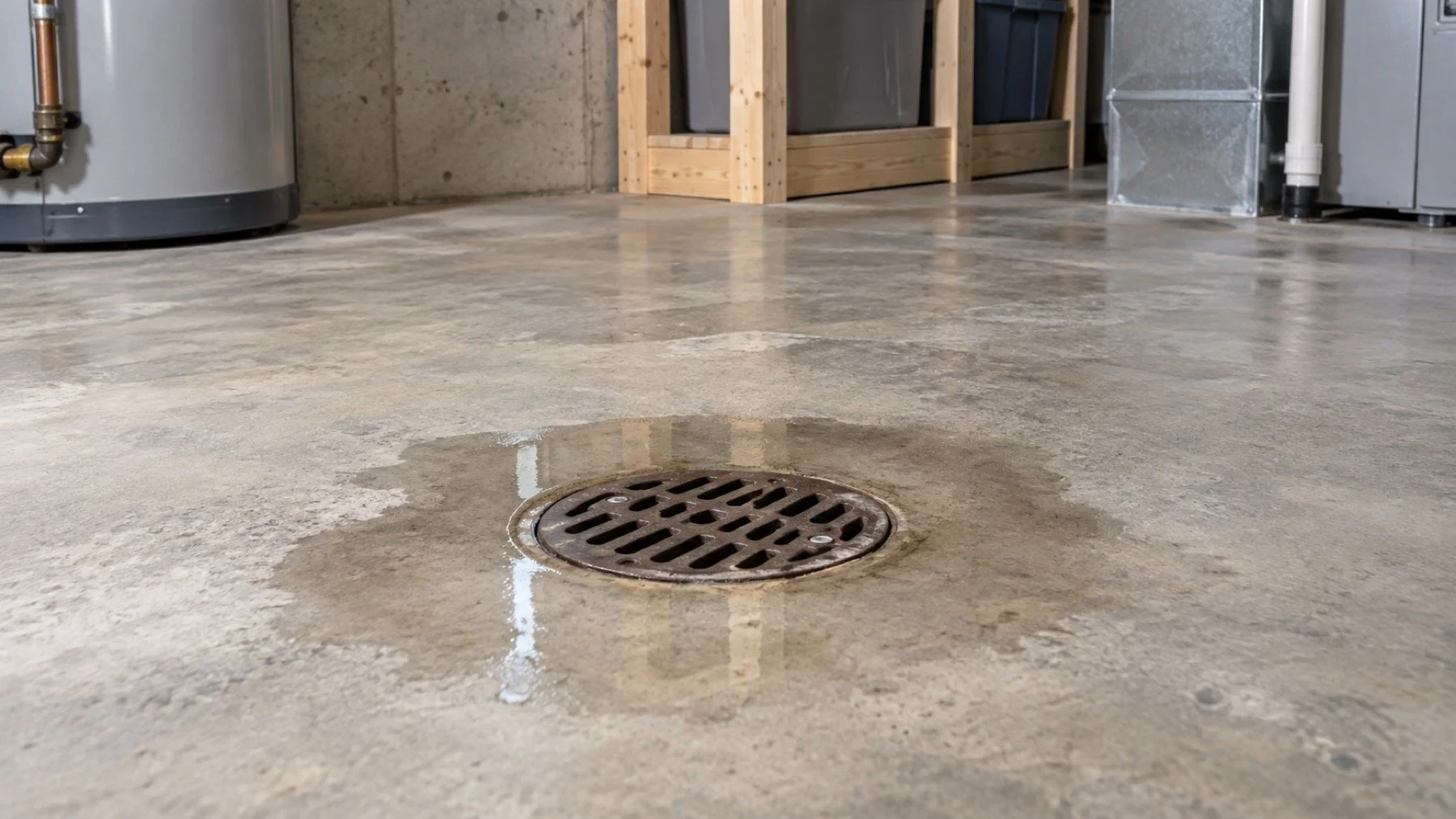
The basement floor drain is often the lowest open point in the house. When water rises there, the drain may be showing a blockage farther downstream rather than causing the problem itself.
Water rising at the basement floor drain while other fixtures still drain normally usually points to a blockage downstream of the house, so the useful first step is recording what else backs up and when.We ask what else changed at the same time. A toilet that gurgles, a laundry discharge that triggers the rise, or several slow lower fixtures places the restriction in a different part of the system. The water level and timing are useful evidence before any equipment enters the drain.
This field guide covers safe observations and the point where you should stop using fixtures and call for drainage service.
Stop adding water and mark the level
Pause laundry, dishwashing, showers, and flushing while the drain is rising. Mark the highest level with tape from a dry location and note whether it falls when the house is not using water. That simple pattern separates an active inflow problem from a standing restriction.
Keep people and pets away from contaminated water. Do not use a wet vacuum or electrical tool in the area unless the equipment and conditions are confirmed safe.
Use fixture behaviour to locate the likely zone
If only one sink or tub is slow, the restriction may be local to that branch. If the basement floor drain rises when upstairs fixtures discharge, the issue is likely downstream of those connections. If water appears during a municipal storm with no indoor use, sewer surcharge or groundwater paths need consideration.
Write down the order in which fixtures change. The first affected opening can be more informative than the largest puddle.
Leave the trap and cleanout intact
Removing a floor drain grate does not provide the same access as an approved cleanout. Pushing a cable through an unknown trap can damage components or leave equipment stuck. Chemical drain products add exposure risk and can remain in the line for the plumber.
Tell the plumber about anything already poured into the drain. Keep the cleanout area clear and photograph its cap, but do not loosen a cap under pressure.
Choose camera work after flow is restored when needed
A drain cable can restore a path without identifying every cause. Camera inspection may help after the line is open enough to see, especially when backups repeat or the pipe condition is unknown. Standing dirty water can limit what the lens reveals.
Seal Plumbing lists drain snaking and camera inspections on its repair service page. The plumber can decide which sequence suits the symptoms and access points.
Separate a backup from basement drainage planning
A backwater valve can reduce reverse sewer flow when properly selected and maintained, but it is not a cure for every blockage. Weeping tile and sump systems handle groundwater, not normal sanitary discharge. The inspection has to identify which system brought the water to the floor.
Toronto publishes basement flooding guidance and a subsidy program with defined conditions. Use the city source for current eligibility and process rather than treating a device recommendation as a subsidy approval.
Use the lowest opening as a map of the blockage
A basement floor drain often becomes the first visible outlet because it is low. That does not mean the obstruction sits directly under the grate. If a laundry sink, basement toilet, or main floor fixture also changes when water rises, the shared pattern can point farther downstream. Draw a quick fixture map and mark which ones were used immediately before the backup.
Run no more water once sewage or an active backup appears. Do not test every toilet to see what happens. The extra discharge can increase the spill. Keep people and pets away, avoid contact, and protect nearby electrical equipment only when it is safe to do so. Tell the plumber whether the water is clear, grey, or contaminated and whether the level falls on its own.
If the drain only has a dry trap and odour, that is different from water being pushed upward. If water appears after heavy rain without fixture use, sewer surcharge or groundwater pathways may enter the investigation. If it appears during laundry discharge, a branch or main drain restriction becomes more likely. Timing turns the floor opening into useful evidence.
Choose access before choosing equipment
The plumber may start at a cleanout, remove a fixture, or use another approved access point depending on the drain layout. Opening the floor drain itself is not always the best route. The access choice should allow the cable, jetting equipment, or camera to reach the suspected section without damaging a trap or pushing debris into a less accessible location.
Drain snaking can restore flow by cutting or moving an obstruction. A camera can then help identify roots, offsets, damage, buildup, or another physical condition when the line is clear enough to see. A camera is not a substitute for opening a completely blocked line, and a clear image of one section does not prove every downstream connection is sound.
Ask the technician to explain where the camera is, how distance was measured, and which direction the line runs. Save meaningful stills or video with a location note. That record supports a targeted repair if damage is found and gives a baseline if the symptom returns. A generic clip of water in a pipe is less useful than a finding tied to a known access point.
Separate cleaning, repair, and flood protection
Clearing a blockage addresses the immediate loss of flow. Repairing a broken or displaced pipe addresses a physical defect. A backwater valve addresses reverse sewer flow under suitable conditions. A sump system handles collected groundwater. These actions solve different problems, so the service recommendation should state which evidence supports each one.
Toronto explains that basement flooding can involve sewer backup, overland flow, and foundation drainage. The city also publishes a protection subsidy program with eligibility and approval requirements. Do not assume that a backed up floor drain qualifies a property or that one device will address every route. Diagnosis and the current city process come first.
After normal flow returns, record what was removed or observed, which line was accessed, and whether further inspection was recommended. Clean and disinfect affected areas using appropriate guidance for the water category. If building materials or contents were contaminated, involve qualified restoration help. The plumbing visit restores and assesses the system, while cleanup and material decisions may need a separate scope.
What to report when the water has already gone down
A drain that looks normal the next morning can still hold the evidence of a recurring restriction. Write down the highest water line, colour and odour, rainfall, fixture use, duration, and whether neighbours reported sewer trouble. Photograph residue or staining before cleaning where it is safe. Note any gurgling or slow fixtures that occurred in the hours before the backup.
Share previous invoices, camera files, repair locations, and backwater valve records if they exist. Tell the plumber about finished walls, storage, or flooring that covers cleanouts. This history helps choose an access point and reduces repeated exploratory work. It also makes it easier to compare a new camera observation with a known condition.
Do not pour chemical cleaner into the floor drain before the visit. It may not reach the obstruction, can create a handling hazard, and can obscure what entered the line. Keep the system use low and let the plumber know exactly what products or actions were tried. Accurate history is more useful than a drain that has been tested repeatedly after the event.
Questions to answer before the plumber arrives
Which fixture was used last? Did the water rise during rain or dry weather? Did a toilet, sink, or laundry drain slow at the same time? How high did the water reach, how long did it remain, and has this happened before? These answers help place the likely restriction before equipment is brought into the basement.
Send a floor sketch, drain and cleanout photos, previous camera records, and the location of any backwater valve. Seal Plumbing can plan safe access for drain clearing or inspection and explain what the findings support. Avoid a cost promise until the access, obstruction, pipe condition, and required cleanup are known.
Keep the finding tied to the drain map
Once the line is open, ask what changed and what remains uncertain. A removed obstruction, a camera finding, normal downstream flow, or a municipal event each leads to a different prevention plan. Keep the evidence tied to the access point and drain route so a later recurrence can be compared accurately.
Follow the drain from symptom to inspection
Drain clearing, camera inspection, and flood protection answer different parts of the problem.
Toronto allows two years to apply for eligible flood protection work completed on or after November 12, 2025. Work completed before that date has a one year application deadline. current City of Toronto subsidy program.
Code aware next step when the water rises
Stop using water, record which fixture triggered the rise, and send photos of the floor drain and accessible cleanout. Seal Plumbing can plan the next drainage test.