
Weeping Tile and a Wet Basement Floor: What a Plumber Checks First
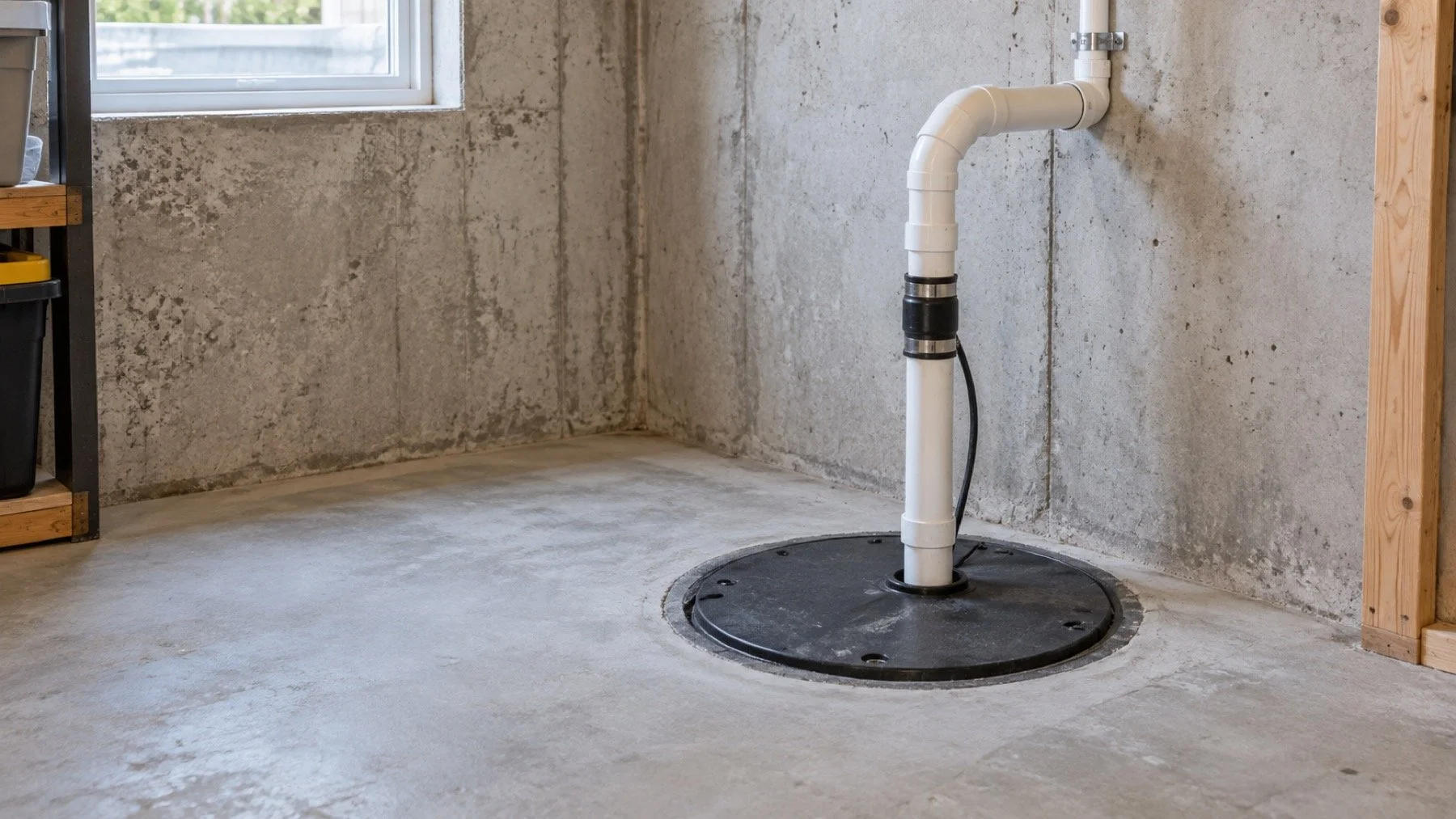
You come downstairs and find a dark line of water spreading across the basement floor. The first thought is often that the weeping tile has failed. That pipe is buried beside the footings, but the visible problem may be at the sump pit, the pump, the discharge, or the connection that carries collected water away.
Weeping tile is the perforated pipe around the footings that carries groundwater to a sump pit, so a wet basement floor usually points to the pit, the pump or that connection rather than to the pipe in the ground.We start by separating groundwater from a plumbing leak and a sewer backup. The timing, the water location, the weather, and the behaviour of the sump pit tell us where to look next. That order matters because opening a finished floor before checking the accessible parts creates disruption without improving the diagnosis.
This field guide explains what you can record safely, what a plumber checks first, and where exterior drainage or waterproofing work may need a different contractor.
Start with the water, not the buried pipe
Clean water beside a foundation wall after rain suggests a different path than water rising through a floor drain. Water beside the water heater, laundry connection, or supply valve may come from the plumbing system instead. Photograph the first wet point before mopping, note any odour, and record whether the water appeared during rain or while fixtures were running.
Do not touch standing water near electrical equipment. If the water could contain sewage, keep people and pets away from the area. These observations help narrow the source, but they do not make the water safe.
Read the sump pit before assuming the tile is blocked
A pit that is full while the pump is silent points toward the pump, its power, its float, or a blocked discharge. A pump that runs continuously without lowering the level points toward a discharge problem, heavy inflow, or equipment that cannot keep up. An empty pit beside a wet floor suggests the water may not be reaching the pit at all.
Watch from a safe distance and note the level. Do not reach into the pit, defeat the float, or unplug equipment while water is entering. A plumber can test the pump and visible connections before anyone discusses buried drainage.
Follow the discharge to the safe visible limit
The discharge pipe must move water away from the pit without leaking back into the basement. A separated joint, frozen exterior section, blocked outlet, or failed check valve can send water back or stop the system from clearing the pit. The useful check is visual. Look for drips, vibration, loose fittings, and water returning after the pump stops.
Exterior grading, foundation cracks, and waterproofing are separate questions. Seal Plumbing can assess the plumbing and drainage connections shown on its residential and repair service paths. Exterior excavation or waterproofing should not be assumed to be part of that plumbing scope.
Use the pattern to choose the next inspection
If several lower fixtures slow or the floor drain rises, the problem may be in the building drain or sewer rather than the weeping tile. If the wet area tracks from a wall only after rain, surface drainage and foundation conditions move higher on the list. If the pit fills and the pump does not clear it, the pump system needs attention first.
The City of Toronto explains that basement flooding can have several sources, including overland flow, foundation drainage, and sewer backup. Its guidance supports checking the path instead of assigning every wet basement to one buried component.
Prepare useful evidence for the visit
Write down the rainfall timing, the first wet location, the pit level, whether the pump ran, and which fixtures were in use. Include a short video of the pump cycle only if you can record it without approaching water or exposed electrical equipment. Move valuables, but do not cover the drain or seal an opening.
A clear record lets the plumber reproduce the condition and decide whether the next step is pump testing, drain inspection, a discharge correction, or referral for foundation work. It also prevents the visible puddle from becoming the only piece of evidence after the floor is dry.
Separate the four water paths before choosing a repair
A wet basement can receive water from the plumbing supply, the sanitary drain, surface runoff, or groundwater collected at the footing. Those paths can overlap in the same room, yet each calls for a different test. Supply water often follows a pressurized pipe or fixture connection. Drain water may carry odour or appear when fixtures discharge. Surface water often starts near a wall, window well, or penetration. Groundwater may show as the sump level rises during a long rain or spring thaw.
Start with timing and direction. Mark the edge of the wet area with removable tape after the area is safe to approach. Note whether the line grows from a wall, a floor joint, the pit, or the floor drain. Then stop using nearby fixtures briefly and watch for change. This does not diagnose the system, but it gives the plumber a sequence instead of a room that has already been dried with no record of where the water first appeared.
Pumping away the visible puddle is only the immediate cleanup. The next rain can follow the same path unless the inspection identifies whether the source is the sump system, a plumbing line, the sanitary drain, or the building exterior. Keep the observation record until the source and the completed scope agree.
What the pit and pump can reveal in one cycle
The useful observation is not simply whether the pump makes noise. Watch the water level before the pump starts, while it runs, and after it stops. A normal cycle should lower the level and leave enough time before the next start for the incoming water rate. Rapid starts can point to water returning through the discharge, a float problem, a small effective pit volume, or unusually heavy inflow. A motor sound without a falling level calls for a different inspection than a silent pump in a full pit.
The check valve keeps discharged water from dropping back into the pit when the pump stops. If that valve fails, the same column of water can return and trigger another cycle. A blocked or frozen exterior outlet can also stop discharge. Neither condition proves that the footing drain is clear or blocked, but both are accessible parts of the route and should be checked before excavation is discussed.
Do not lift a sealed lid, handle cords, or reach past piping while the pit is active. Photograph labels from a dry position. Record whether a separate backup pump, alarm, battery, or high water sensor is present. If the basement is finished around the pit, also show how the cover and valves can be reached without removing permanent millwork.
When a camera or exterior specialist becomes the next useful step
A drain camera can help when the symptoms point to an accessible building drain or when the connection path is suitable for inspection. It cannot see through soil to judge every section of perforated footing pipe, and it does not replace an exterior drainage assessment. Ask what line will be entered, where the access point is, and what decision the video is expected to support before treating a camera as a universal answer.
If water consistently enters at a foundation crack, window well, or wall joint while the sump system operates normally, grading and waterproofing questions move ahead of pump replacement. A plumber can still confirm that visible drainage components are functioning. The homeowner may then need a foundation or drainage contractor to assess exterior conditions. Clear scope protects you from paying two trades to investigate the same symptom without sharing evidence.
For a GTA service visit, prepare rainfall dates, a floor sketch, pit observations, pump and alarm labels, discharge photos, and a list of affected fixtures. The City of Toronto basement flooding guidance describes several possible sources of basement water. That is why the first visit should narrow the path and set the next test, not promise one buried cause before the accessible evidence is checked.
Leave the visit with a defined water path
Ask for the result in writing: which accessible components were tested, what the observations showed, and which condition remains unconfirmed. If the next step belongs to an exterior contractor, pass along the rainfall record and sump observations. That handoff can prevent a second visit from starting with the same assumptions and no shared evidence.
Keep the investigation proportional to the evidence. An accessible pump or discharge fault should be addressed before finished floors are opened. A repeated wall entry pattern should be shared with the appropriate exterior specialist. The useful outcome is a documented water path and a next step that matches it.
Connect the water path with the right service
These pages help separate sump and drain work from the wider residential scope.
Toronto advises that a sump pump discharge should empty onto a permeable surface at least 2 metres from the foundation wall. City of Toronto subsidy details.
Code aware next step for a wet basement
Send the rainfall timing, pit observations, and photos of the first wet area. Seal Plumbing can assess the plumbing side of the problem and define the next useful test.