
Backflow Preventer or Backwater Valve: Which Device Your Building Needs
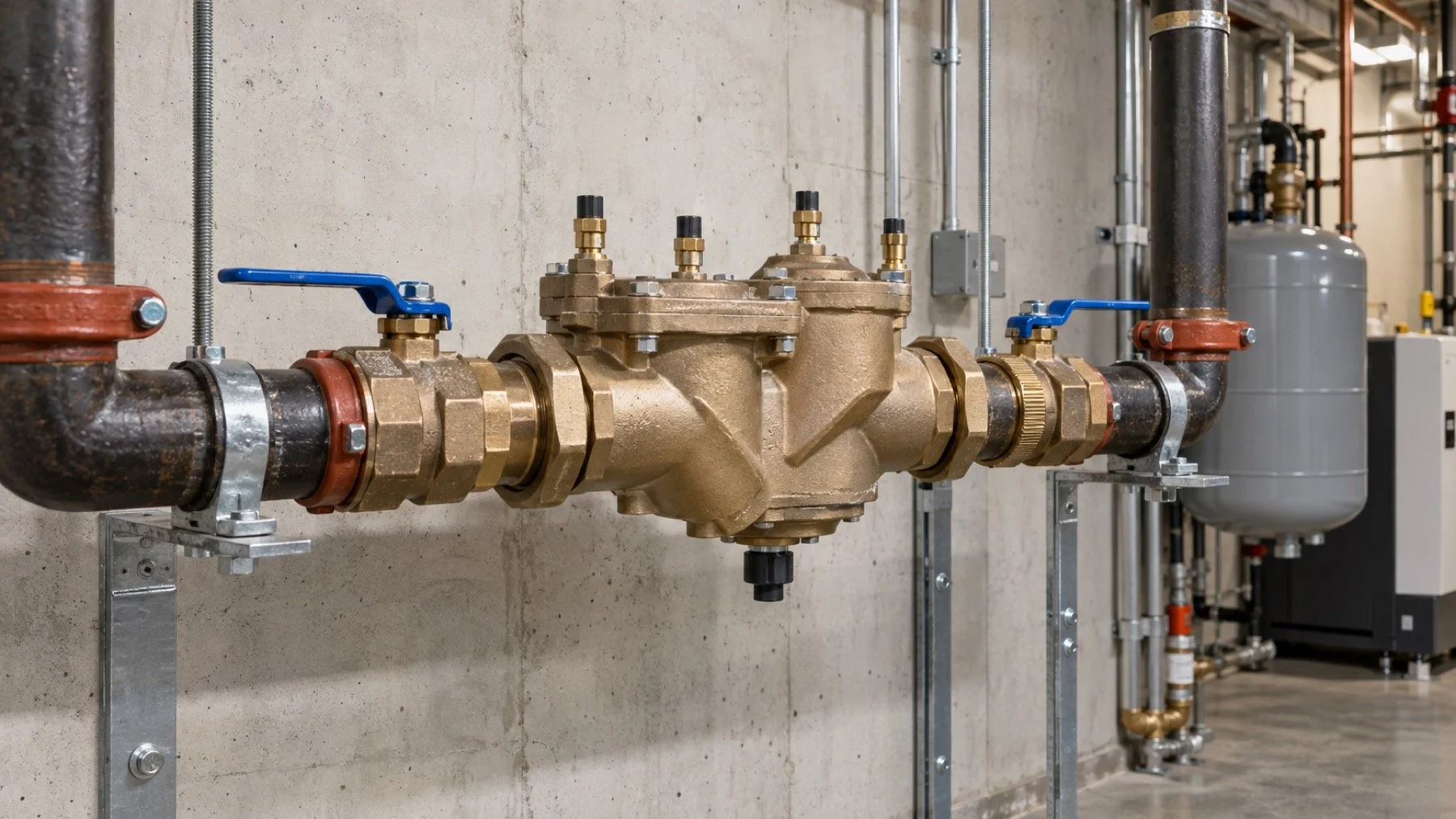
Backflow preventer and backwater valve sound interchangeable, but they protect two different systems. One addresses water moving the wrong way into the drinking water supply. The other addresses sewage moving the wrong way through the building drain.
We assess them separately because the hazard, location, selection rules, and maintenance path are different. A commercial property can need a backflow prevention program review and a backwater valve assessment at the same time. Installing one device does not complete the job of the other.
This comparison helps a GTA property owner ask for the correct assessment without claiming that Seal Plumbing performs certified backflow testing or files survey reports.
Compare the direction and the hazard
A water service normally carries potable water from the public main into the building. Backflow is a reversal that can pull or push water from a building system toward that supply. A prevention assembly is selected for the type of connection and the level of hazard identified by the authority or qualified designer.
A building drain normally carries wastewater out. During a sewer surcharge, flow can move back toward lower fixtures. A backwater valve is installed in the drainage path so its gate can close against that reverse flow while allowing normal discharge at other times.
Find each device on the right system
A backflow prevention assembly sits on a water line serving the relevant connection or premises. It may be visible in a mechanical room and needs room for access. A backwater valve sits in the drainage system, often below the basement floor, with an access cover that must remain reachable.
Do not identify the device by its lid, handle, or brand colour. Trace which pipe it connects to. Water service piping and sanitary drainage have different materials, slopes, and operating conditions.
Use Toronto requirements for the water side
The City of Toronto operates a Backflow Prevention Program for industrial, commercial, institutional, and multi residential properties identified by its bylaw and program rules. The city describes surveys, device installation, and annual testing requirements for affected properties. Check the current city page for the property category and required qualified persons.
Seal Plumbing does not list certified testing or survey filing on its public site. A property manager should confirm who will perform those regulated steps before assigning the plumbing installation scope.
Assess sewer protection as its own project
A backwater valve needs the right drain location, flow direction, access, and relationship to fixtures. Closing the valve during a surcharge can also prevent wastewater from leaving the building, so occupants need to understand that fixtures should not be used while it is closed.
Toronto also describes a Basement Flooding Protection Subsidy Program with eligibility and application conditions. Treat that program as a city process, not a promise that a particular property or device will qualify.
Ask for two answers when the building has two risks
A restaurant, clinic, workshop, or mixed use property can have cross connection risks on the water supply and sewer backup risk on the drainage side. The correct brief identifies both systems, the authority involved, the existing devices, and who owns testing or reporting.
Bring service drawings, prior reports, device tags, and photos of accessible mechanical spaces. That information helps the plumber separate installation work from testing, engineering, and municipal filing.
Three ways to keep the two devices distinct
Use the pipe contents to identify the device
Start by asking what normally moves through the pipe. A potable water line is pressurized and supplies fixtures, equipment, or a process. A sanitary drain relies on gravity to carry wastewater away. Backflow prevention belongs to the water supply side. A backwater valve belongs to the drainage side. This simple distinction prevents a property request from being sent to the wrong program or priced as the wrong scope.
On the water side, backflow can result from back pressure or back siphonage. Back pressure occurs when pressure in the connected system exceeds the supply pressure. Back siphonage occurs when the supply pressure drops and can draw water backward. The selected prevention method depends on the connection and hazard assessment. A device name copied from another property is not enough to establish what this building requires.
On the drainage side, a sewer surcharge can push wastewater toward low openings. The backwater valve gate closes against that reverse direction. While it is closed, wastewater from the building also needs somewhere to go, so occupants should stop using connected fixtures. This operating consequence belongs in the building plan, especially for a restaurant, clinic, or multi unit property where several people may keep using water during a storm.
Match responsibility to the regulated step
Toronto describes a Backflow Prevention Program for affected industrial, commercial, institutional, and multi residential properties. Program steps can include a survey, installation of required devices, annual testing, and reporting by qualified people. The building owner should keep city correspondence, survey records, device information, and test reports together. Installation work alone does not replace the other required records.
Seal Plumbing publicly describes commercial drain, vent, and waterline installation, drawing review, and related fit out work. Its site does not advertise backflow survey filing or certified annual testing. Confirm who will complete each regulated step before work begins. That may mean a qualified tester handles the city program record while the plumber coordinates approved installation work shown in the project scope.
A backwater valve assessment follows a separate route. The plumber needs to identify the building drain, downstream connection, fixture arrangement, cleanouts, and a location that keeps the access cover reachable. Toronto has a basement flooding subsidy program with conditions and approvals. Treat eligibility as a city decision and never as an automatic discount attached to a plumbing quote.
Build a maintenance record that names the system
A useful equipment list should not say only valve. Record whether the item serves potable water or drainage, its exact location, manufacturer and model, size, serial or tag number when present, test or cleaning requirement, access route, and the person responsible. Add clear photos that show the surrounding piping so a future technician can identify flow direction without relying on a close view of one label.
For a water supply assembly, follow the current testing and reporting instructions that apply to the property. For a backwater valve, keep the access cover clear and inspect or clean it as directed for the installed product and local conditions. Grease, debris, or stored items can interfere with access. Do not describe the same maintenance interval for both devices because they serve different hazards and program requirements.
When a building may need both protections, request two written answers. Ask what protects the drinking water supply and what protects the building drain. Each answer should name the identified risk, the proposed device or action, the responsible qualified person, the access requirement, and the ongoing record. That format turns similar sounding language into two scopes the owner can manage.
Ask for evidence that names the direction of protection
For backflow prevention, the record should identify the protected water connection, device type, applicable program or design basis, tester when required, and the current result. For a backwater valve, the record should identify the building drain section, access location, flow direction, fixtures affected when it closes, and the inspection or cleaning method. These are different documents because the devices respond to different events.
If a contractor proposal uses only the word backflow, ask whether it means potable water protection or reverse sewage flow. Request a marked photo or drawing. That small clarification can prevent a building owner from approving a drainage device when the city letter concerns the water supply, or from arranging a water assembly test when the basement risk sits in the sewer connection.
A clear request for the site visit
Send the property use, municipal notice or prior report, device tags, mechanical room photos, basement drain layout, and any history of sewer backup. State whether the current concern is drinking water protection, basement flooding, or both. Seal Plumbing can then separate installation work from testing, design, reporting, and city process requirements before the visit is booked.
Name the system before naming the valve
The simplest final check is to point to the pipe and name what it carries. Drinking water points to backflow prevention questions. Wastewater points to backwater protection questions. A complete building plan may contain both, with separate access, records, and qualified people responsible for each requirement.
Keep the water and drainage scopes separate
The relevant commercial, residential, and drainage pages show where each installation scope belongs.
Toronto requires covered backflow prevention devices to be tested at least once a year, and it says submitted records should remain on site for at least 7 years. City of Toronto Backflow Prevention Program.
Code aware next step for two separate systems
Send the property use, existing device photos, and any city correspondence. Seal Plumbing can review the installation scope and identify which regulated steps need another qualified provider.