
Condo Plumbing Renovations in Toronto: Approvals, Shutoffs, and Access
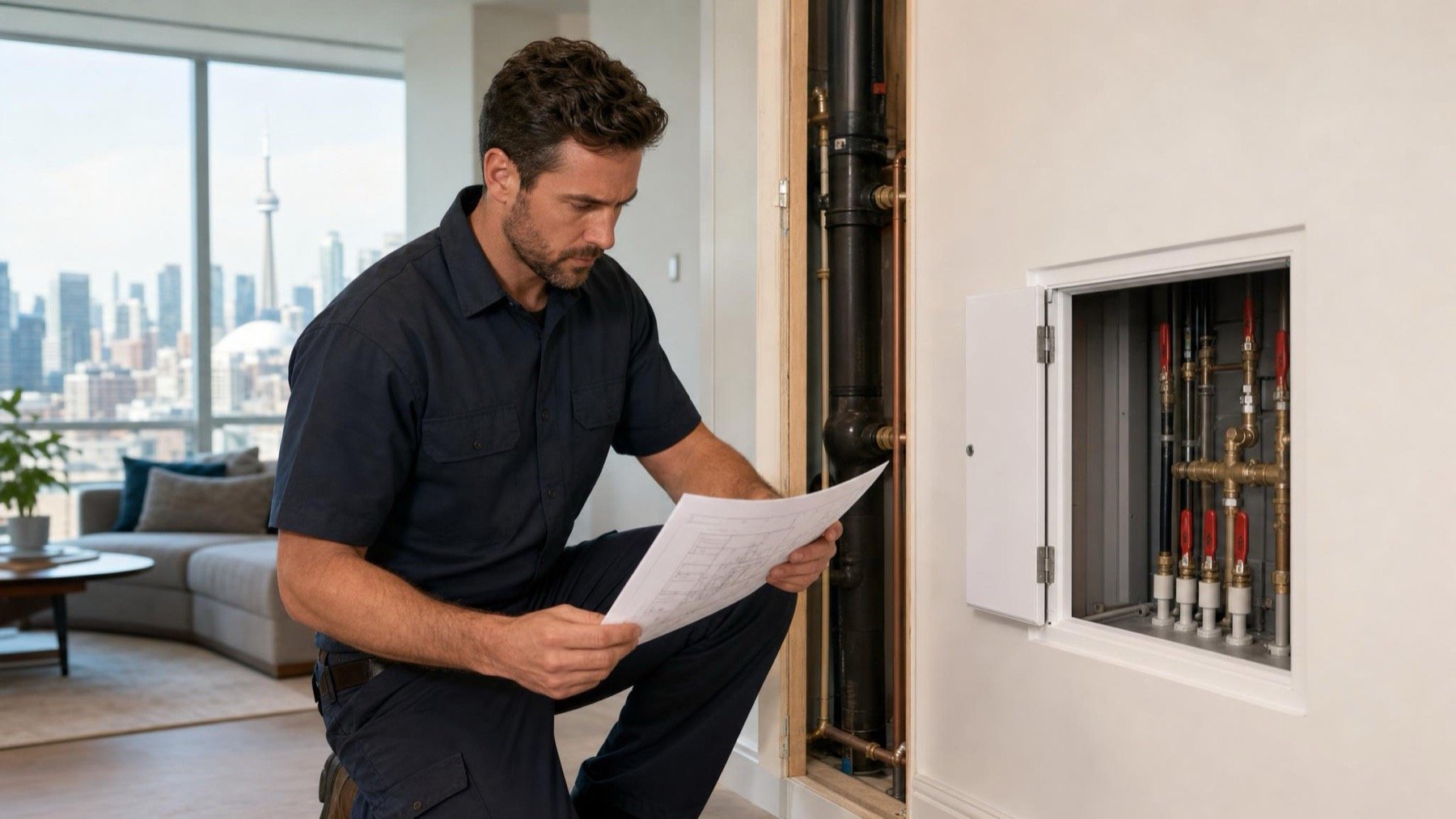
A condo renovation happens inside your unit, but the plumbing often connects to shared risers and building controlled valves. Management rules, shutdown windows, insurance documents, elevator bookings, and noise limits can shape the plumbing schedule before demolition starts.
The safest plan confirms what belongs to the corporation, what belongs to the unit owner, and who can authorize access. Do not order fixtures or remove finishes until the approval path is clear.
In a condo, a technically simple plumbing change can still depend on management approval, a booked riser shutdown and protected access through common areas. We confirm those constraints before treating the job like a detached-house renovation.
Read the alteration agreement first
Ask management for the current renovation package, not a copy from another owner. It may require drawings, contractor insurance, licence information, deposits, working hours, protection details, and advance notice for water shutdowns.
Some changes that look minor can affect shared systems or fire rated assemblies. Submit a clear scope and wait for written authorization where required.
Map risers, branches, and isolation points
A unit shutoff may not isolate every fixture. Older valves may pass water, and some work can require a riser shutdown coordinated by building staff. The plumber should test isolation before the scheduled work window.
Relocating a fixture is constrained by drain slope, venting, slab construction, and the position of shared stacks. A desired layout is not automatically a workable plumbing layout.
Finalize fixtures from specifications
Give the plumber current specification sheets for toilets, tubs, shower systems, faucets, sinks, and appliances. Connection locations, valve depth, carrier needs, and power requirements affect rough in.
The kitchen rough in guide explains why cabinet and appliance decisions must align with plumbing before installation.
Protect common areas and neighbours
Plan material movement, elevator time, corridor protection, debris handling, and parking. Inside the unit, protect floors and isolate dusty access work. Below the work, a neighbouring suite may need notice or access for inspection.
Pressure and drainage tests should happen before walls, ceilings, or cabinets conceal the work. Document the test and any building signoff.
Build a realistic condo sequence
A practical order is approval, investigation, fixture confirmation, selective demolition, verified shutdown, rough in, inspection where required, testing, finish restoration, and final connections. Missing one approval can waste a booked trade day.
Seal Plumbing provides residential renovation plumbing within its GTA service coverage. Send the building package with your request.
Frequently asked questions
Do I need condo board approval to replace plumbing fixtures?
Rules vary. Like for like fixture work may still require contractor documents, notice, or a controlled shutdown. Ask management first.
Who books the water shutdown?
The building usually controls riser shutdowns. The owner or contractor follows the notice and booking process in the renovation rules.
Can I move a toilet in a condo?
Only when structure, drain slope, venting, stack location, approvals, and access make the move feasible.
Can plumbing run inside a concrete slab?
Never cut or alter structural concrete without approved investigation and authorization. Condo slabs can contain reinforcing and building systems.
What should I send the plumber before quoting?
Send the alteration agreement, plans, fixture specifications, photos, unit access details, and known shutdown requirements.
Bring the building rules into the quote
Send the alteration agreement, fixture specifications, unit photos and shutdown procedure if you have them. Contact Seal Plumbing to plan a Toronto condo plumbing renovation.